Overview
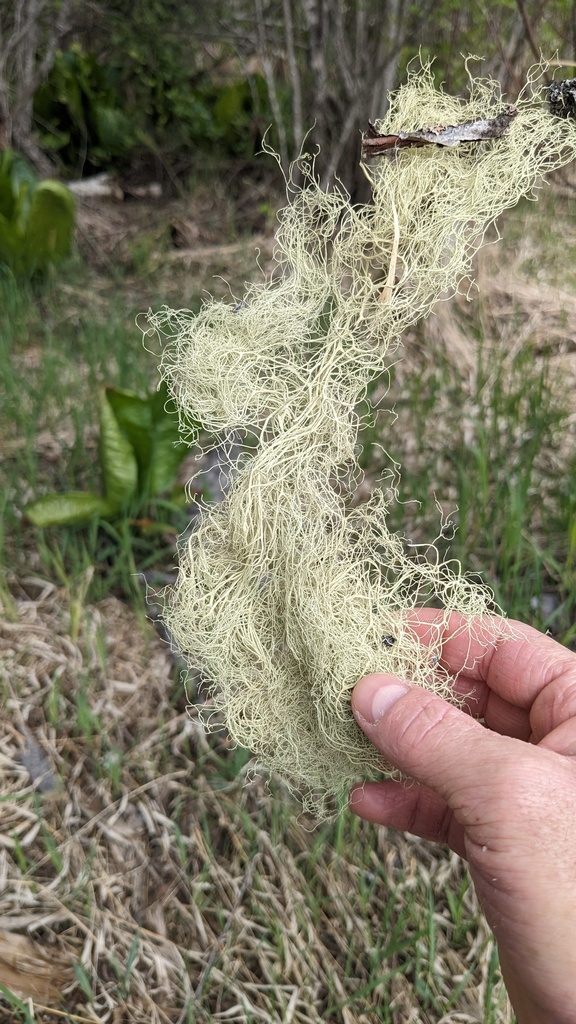
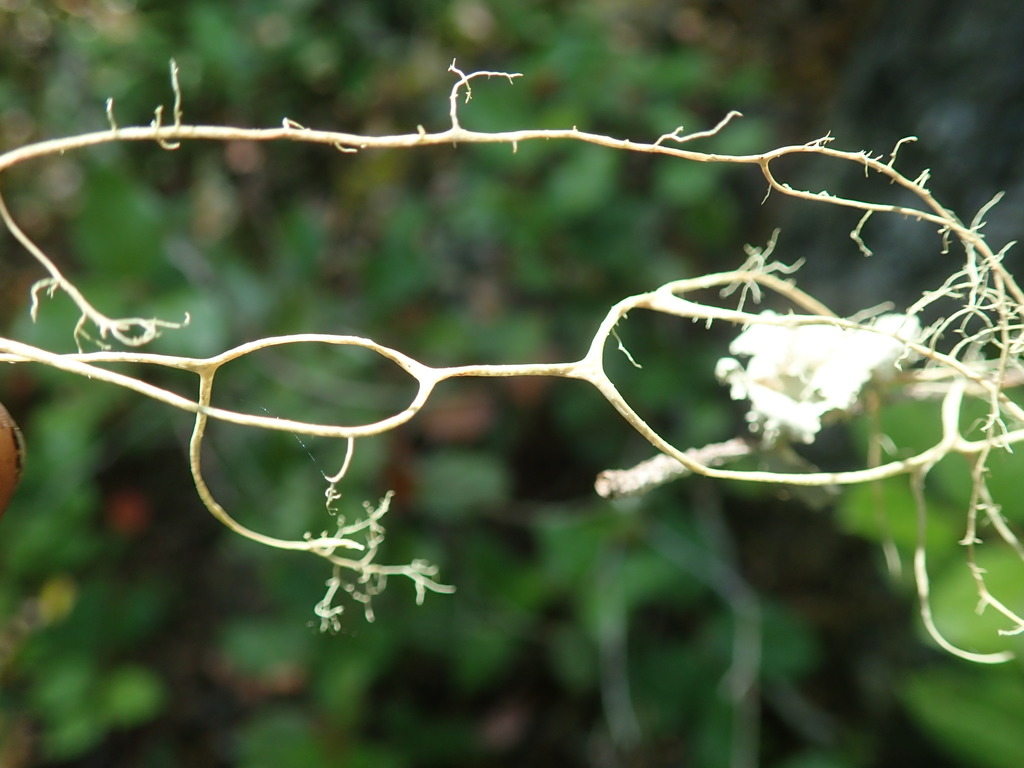
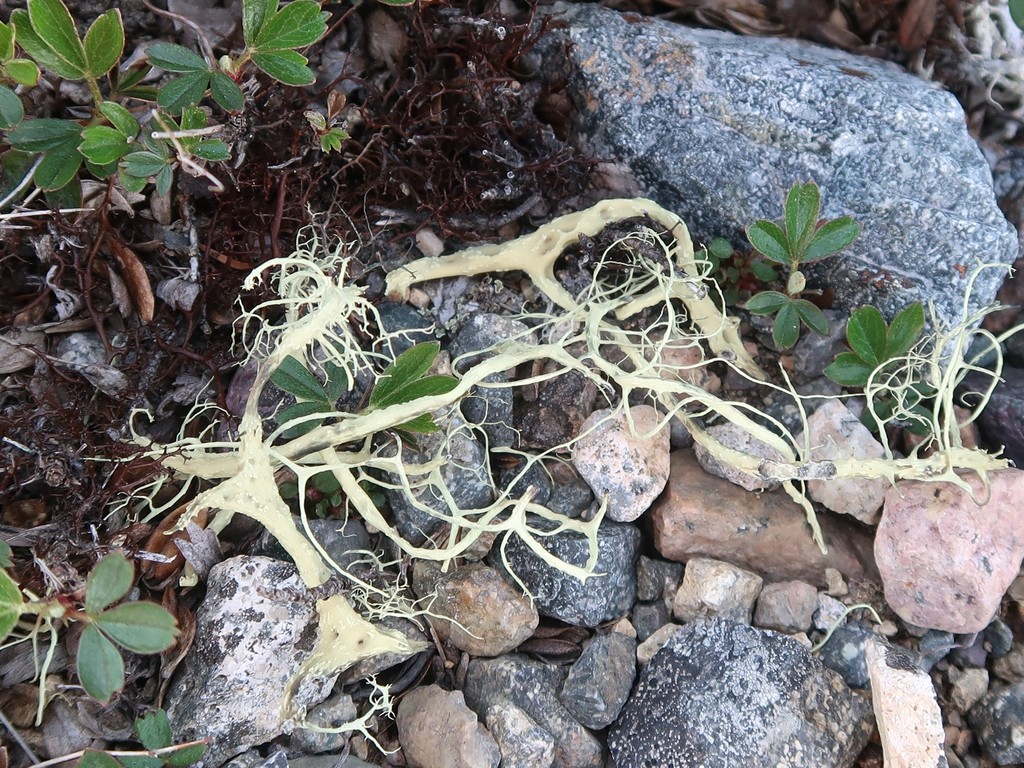
Pale yellow-green to dark, with hair-like strands that often show angular branching, Alectoria has a different texture from Bryoria despite a superficially similar growth habit.
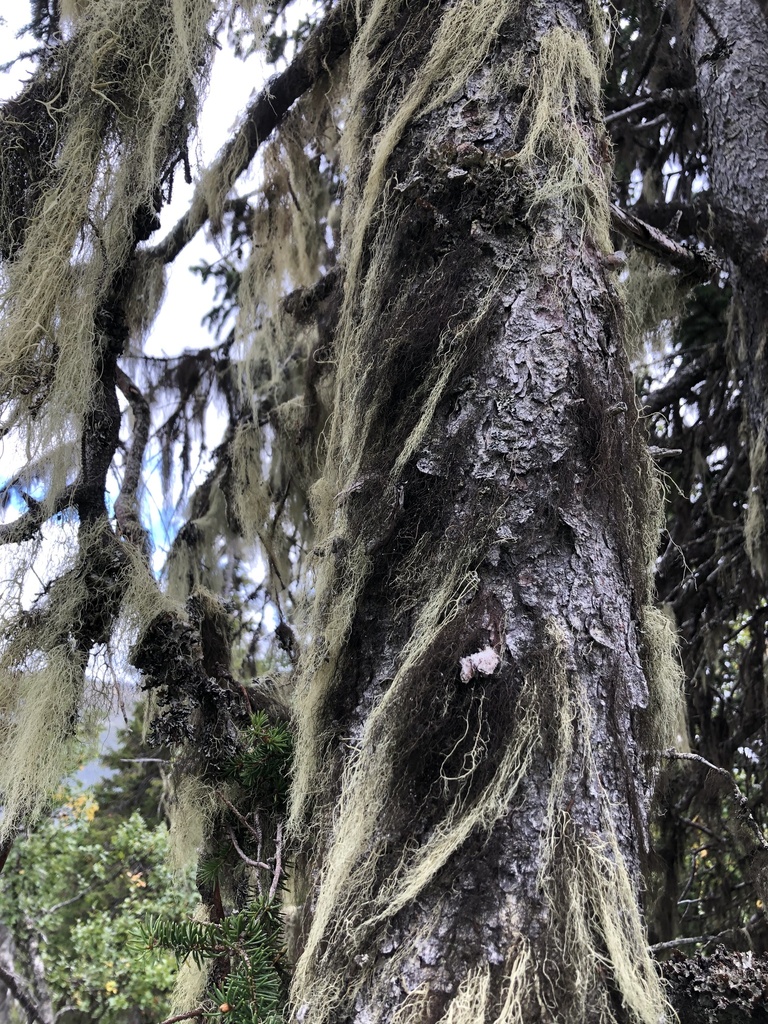
Found on conifer branches in montane and boreal forests, these lichens contribute to the "old forest" aesthetic and provide important nesting material for birds. Species include A. sarmentosa (witches hair), A. imshaugii, and A. vancouverensis.
Identification
- Pale yellow-green to dark, hair-like strands with angular branching.
- Distinguishable from Bryoria by its paler colour, coarser texture, and more angular branch points.
- Like Bryoria, lacks a central cord (unlike Usnea).
- A. sarmentosa produces pseudocyphellae and is the most commonly encountered species.
- Often found intermixed with Bryoria in the same canopy.
Ecology & Habitat
Important component of old-growth forest canopy communities. Provides nesting material and winter food for birds and small mammals. Its biomass in old-growth forests contributes significantly to the ecosystem's nutrient cycling and water interception.
Fun Facts
The common name "Witches Hair" evokes the magical, enchanted appearance of old-growth forests draped in pale, hair-like strands.
Birds actively select Alectoria for nest building. Studies have found that certain species of warblers and hummingbirds preferentially weave it into their nests for insulation and camouflage.
It can take over 100 years for Alectoria to reach its full pendulous length in old-growth forests . When these forests are logged, the lichen is lost for generations.
Some species produce usnic acid, the same antibiotic compound found in Usnea.
In Norse mythology, forests draped in hair-like lichens were believed to be enchanted by forest spirits.
Distribution
Circumboreal; most common in western North America and northern Europe