Overview
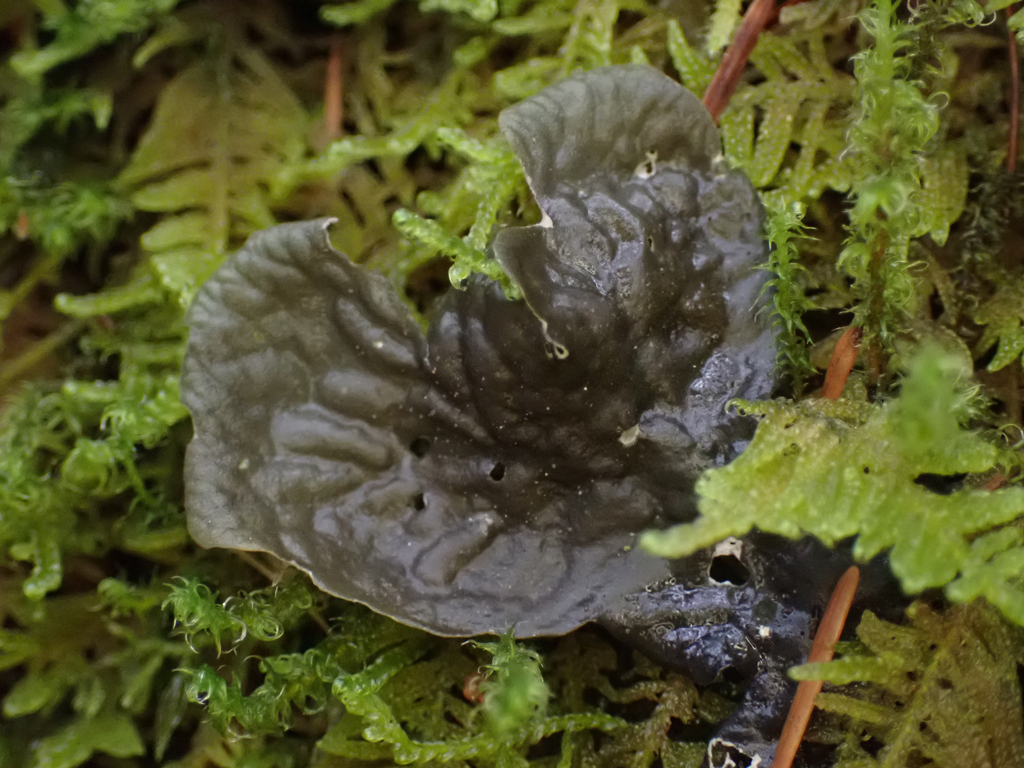
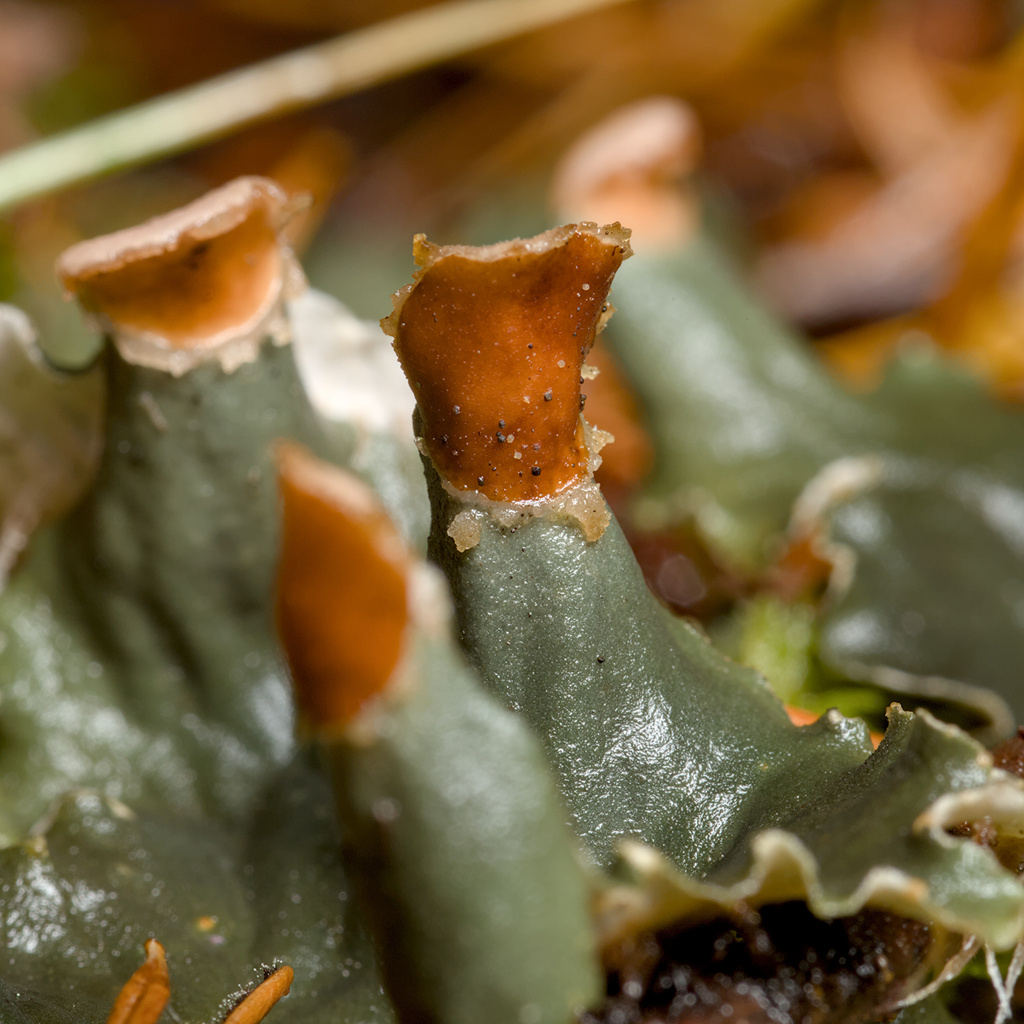
A large, blue-green to brown-green lichen that sprawls over moss on the ground, logs, rocks, and tree bases in damp forests. The upper surface is weakly ridged with a fine tomentum, while tawny brown apothecia curl upward on raised lobe tips , sometimes likened to a dog's tongue.
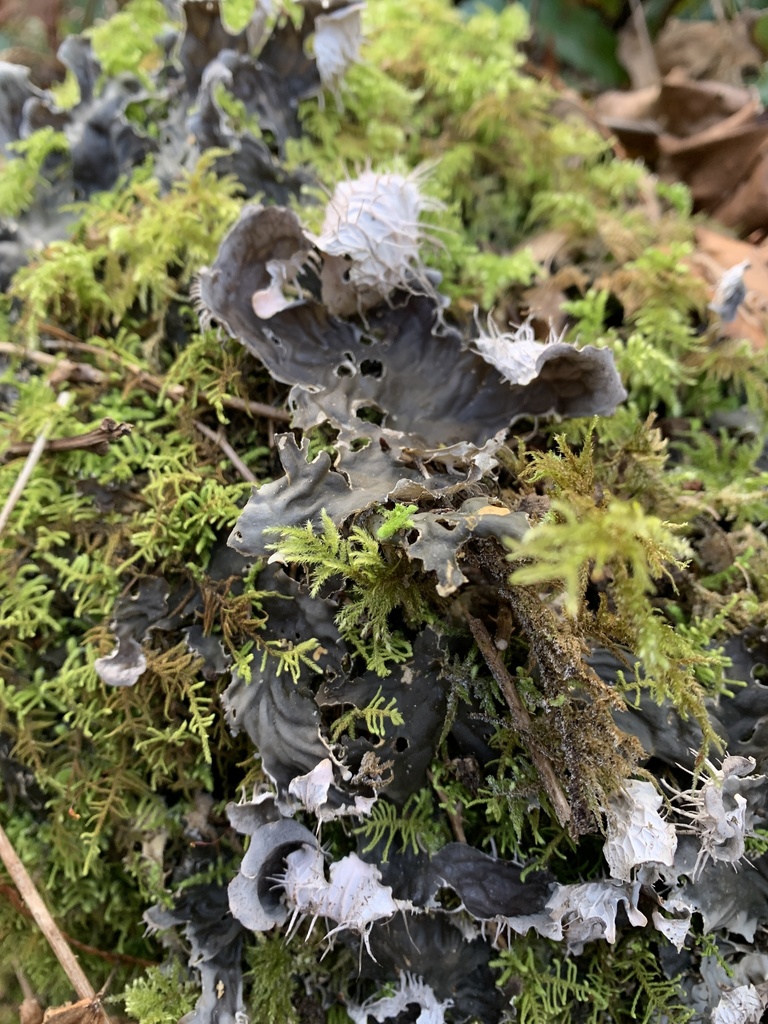
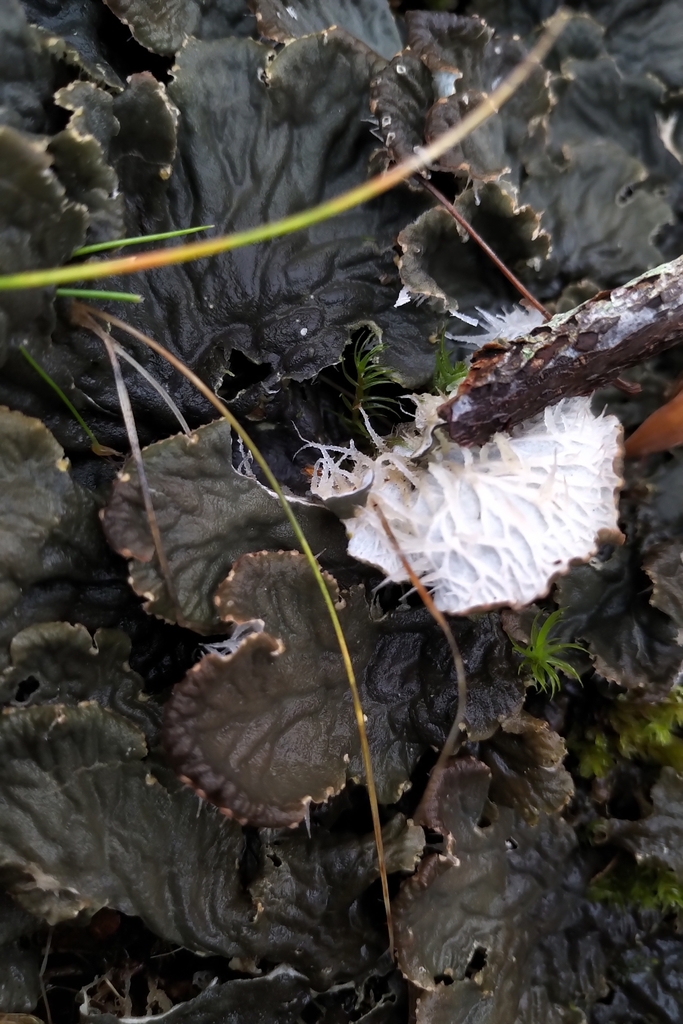
Turn it over and you will find one of its most distinctive features: a network of raised veins covered in velvety tomentum, anchored by long, unbranched rhizines. These veins help channel water across the lower surface.
Identification
- Large, sprawling thallus growing over moss; lobes are 2–4 cm wide.
- Upper surface blue-green to brown, with a downy tomentum.
- Tawny-brown apothecia on curled-up lobe tips, shaped like a dog's tongue.
- Underside has a prominent network of raised, veiny ridges with long, pale rhizines.
- No soredia or isidia; reproduces by spores from the prominent apothecia.
Ecology & Habitat
Grows over moss mats on the ground and on rotting logs. Partners with cyanobacteria (Nostoc) as its photobiont, making it an active nitrogen fixer. Contributes to the nutrient cycling of forest floor ecosystems.
Fun Facts
The "dog lichen" name comes from an 18th-century belief that it could cure rabies (hydrophobia) . It was prescribed as a treatment for dog bites under the Doctrine of Signatures because the apothecia resemble a dog's tongue.
The elaborate vein network on the underside functions like a plumbing system, channeling water from the soil to the entire thallus through capillary action.
All Peltigera species partner with cyanobacteria, making them significant nitrogen fixers ; a single patch can contribute several kilograms of nitrogen per hectare per year to the forest floor.
When dry, it curls up and becomes crispy and brittle , but just minutes after rain, it uncurls and springs back to life, resuming photosynthesis almost immediately.
Distribution
Widespread across temperate and boreal Northern Hemisphere