Overview
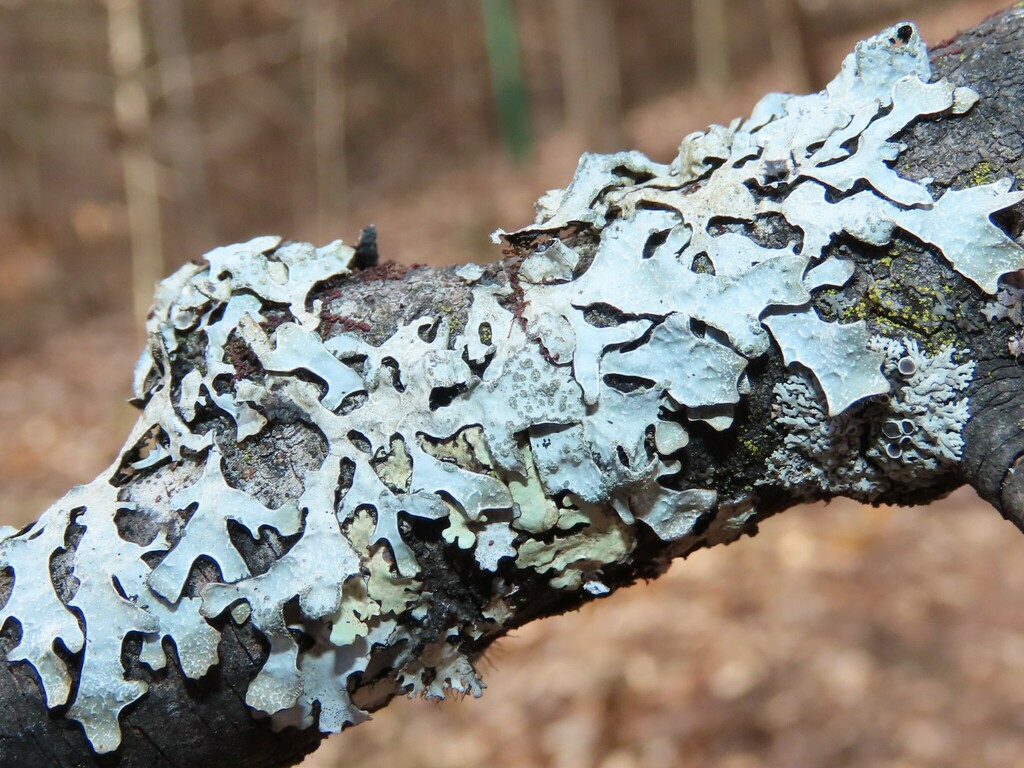
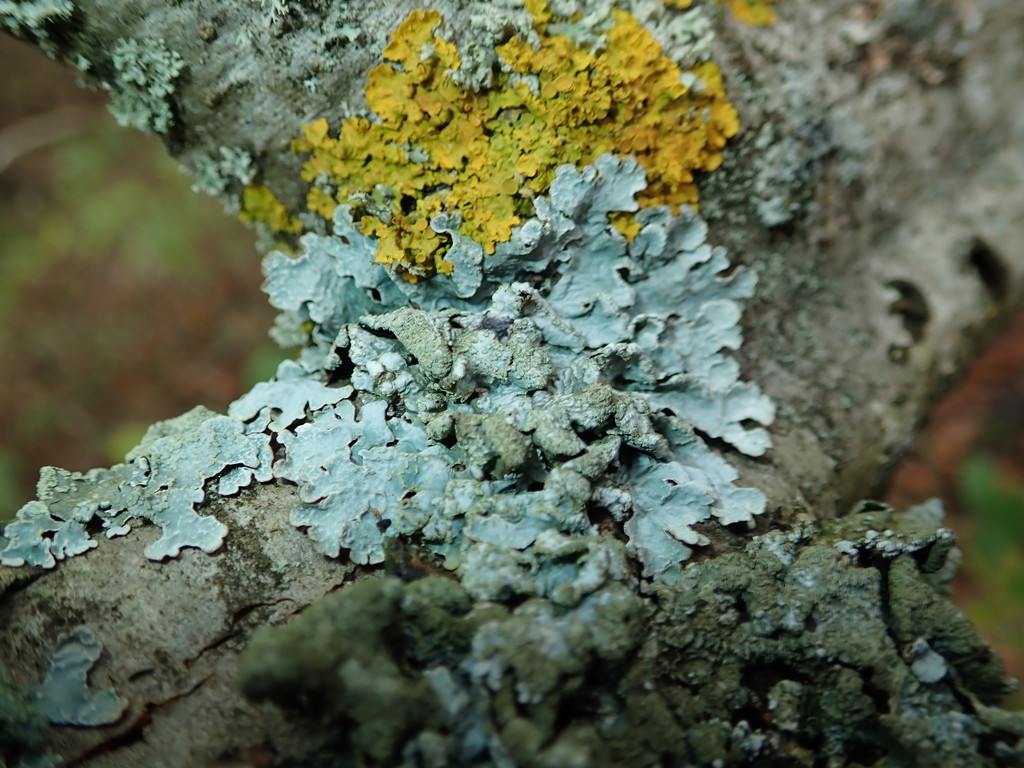
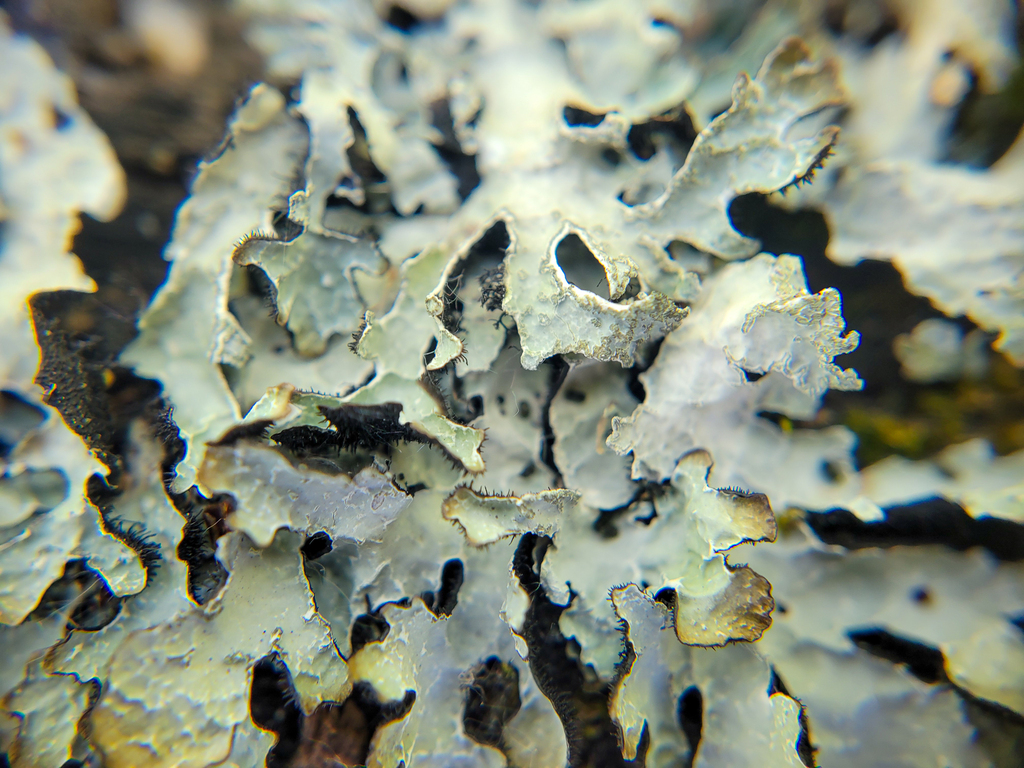
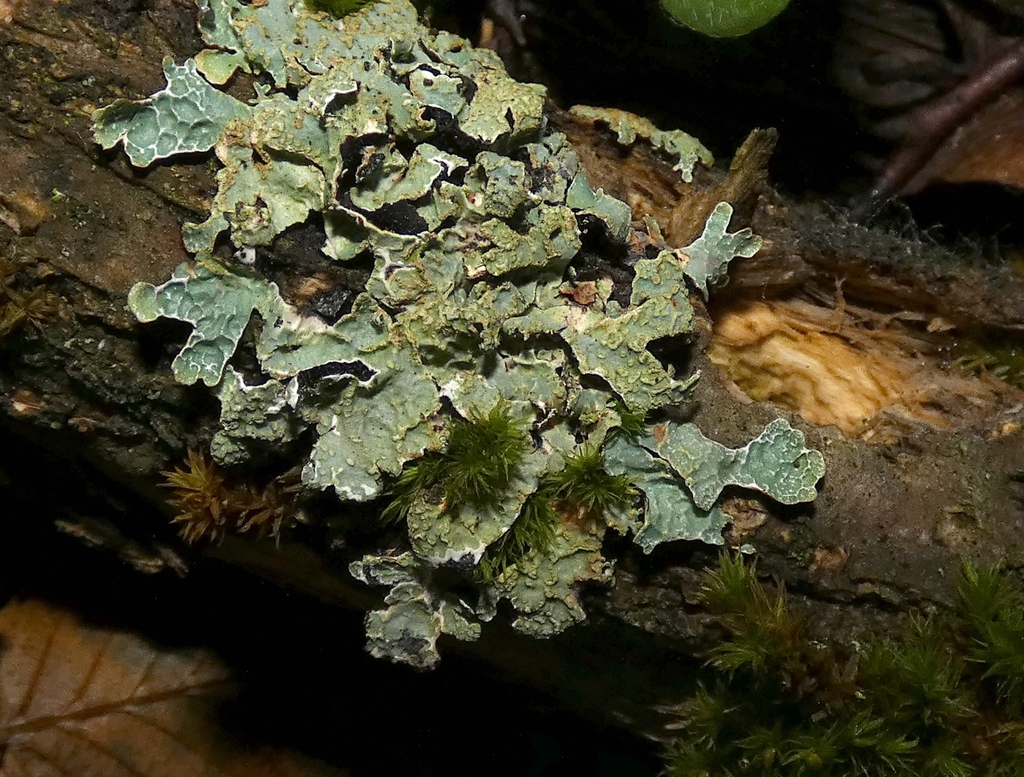
Whitish-green to bluish-gray above and black below, Parmelia sulcata is one of the most common lichens worldwide. Its upper surface is covered in a distinctive network of white, angular cracks (pseudocyphellae) filled with powdery soredia, giving it the "hammered" appearance that inspires its common name.
The short, perpendicularly branched rhizines hold it closely appressed to bark. One of the earliest colonizers on outer branches of oak, it serves as an intermediate nitrogen sensitivity indicator.
Its ubiquity makes it an important baseline species for air quality monitoring studies across Europe and North America. It has been used in hundreds of biomonitoring studies, making it one of the most scientifically studied lichens on the planet.
Identification
- Look for the distinctive network of white cracks (pseudocyphellae) forming a "hammered" pattern on the gray-green upper surface.
- Soredia accumulate in the pseudocyphellae cracks, giving them a powdery, mealy appearance.
- The underside is black with simple to branched rhizines.
- Lobes are typically 2–5 mm wide, forming irregular rosettes up to 20 cm across.
- K+ yellow on cortex; medulla K+ yellow turning red (salazinic acid).
Ecology & Habitat
One of the most pollution-tolerant foliose lichens, though it avoids the most nitrogen-enriched sites. Often found alongside Hypogymnia physodes and Flavoparmelia caperata. Its presence typically indicates moderately clean air. Thrives in well-lit habitats on trunks and branches.
Fun Facts
Scientists have used Parmelia sulcata to map heavy metal pollution . The lichen absorbs metals like lead and cadmium from the air, acting as a living pollution detector.
It is one of the most frequently studied lichens in the world, appearing in over 1,000 scientific papers on air quality and biomonitoring.
The "hammered" pseudocyphellae pattern is actually a gas exchange system . The cracks allow oxygen and carbon dioxide to pass through the otherwise waterproof cortex.
In some parts of Europe, it was used as a folk remedy for lung ailments, following the Doctrine of Signatures (its surface resembles lung tissue).
Despite being common, it is surprisingly genetically diverse ; populations on different continents may be distinct cryptic species.
Distribution
Cosmopolitan; found across Europe, North America, Asia, parts of Africa and Australasia