Overview
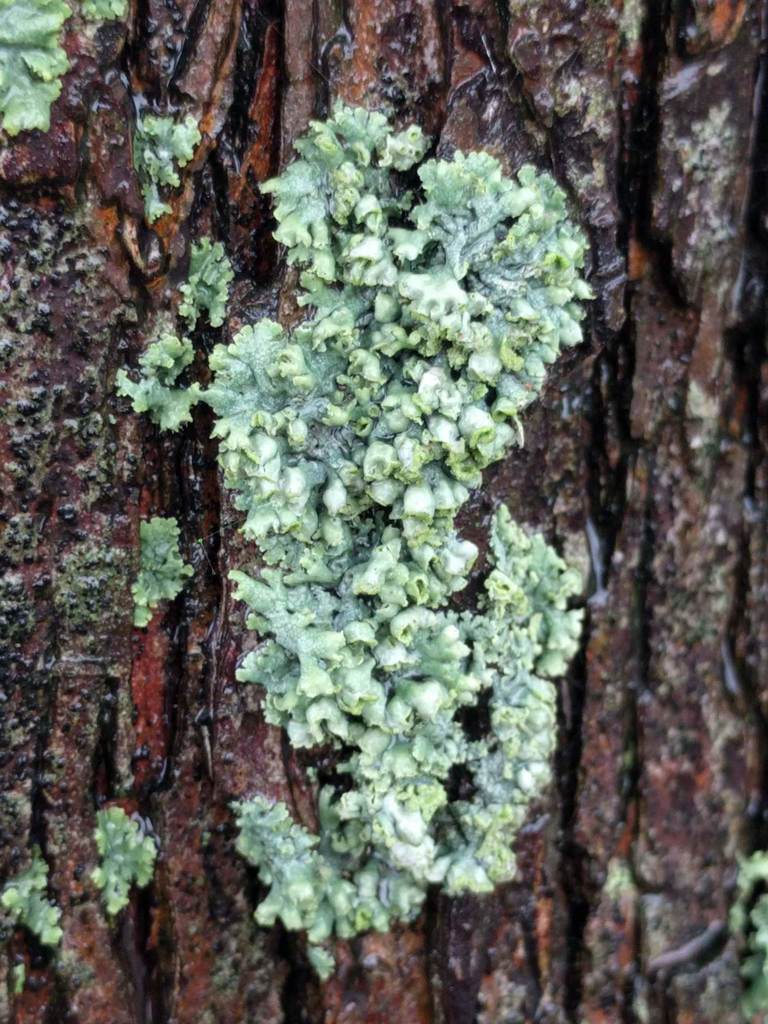
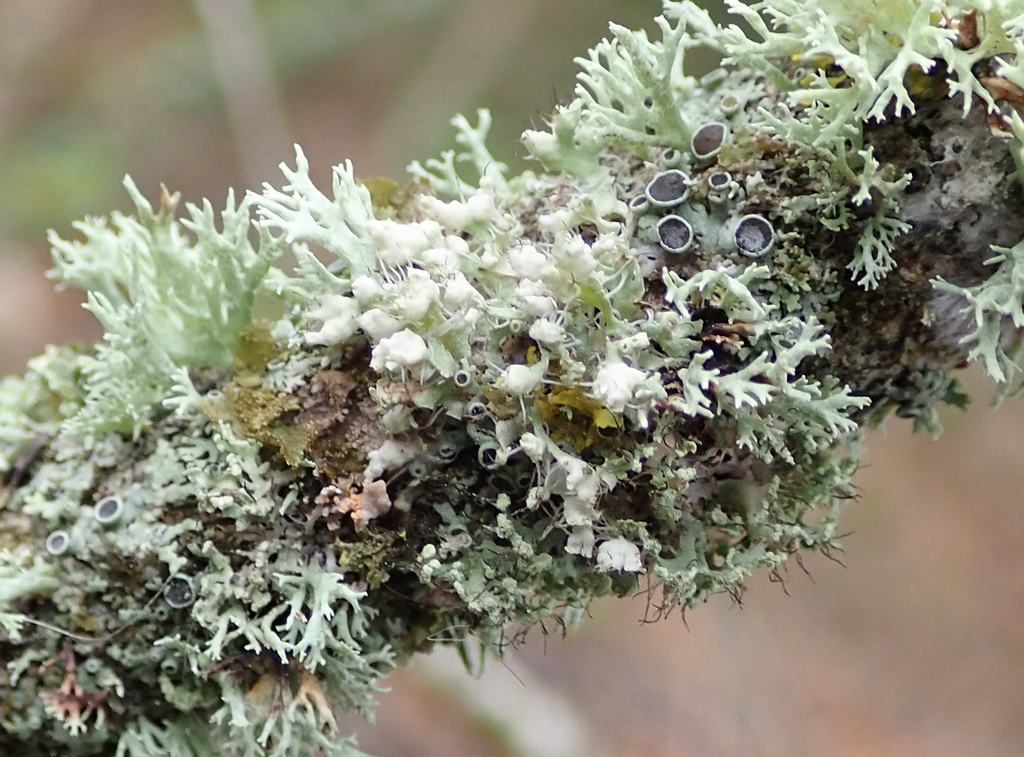
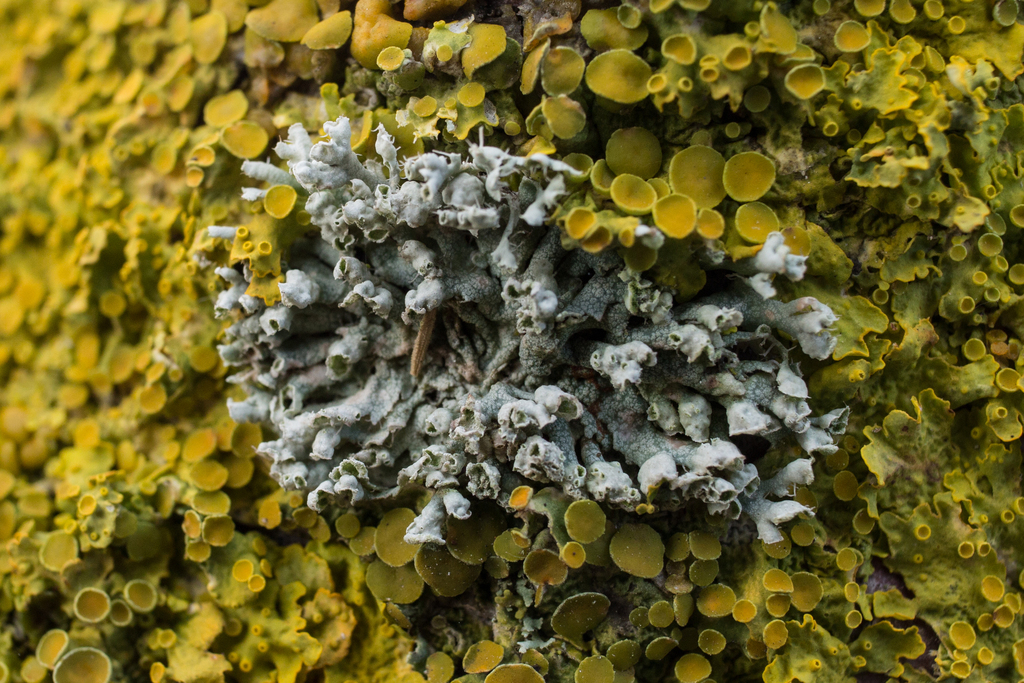
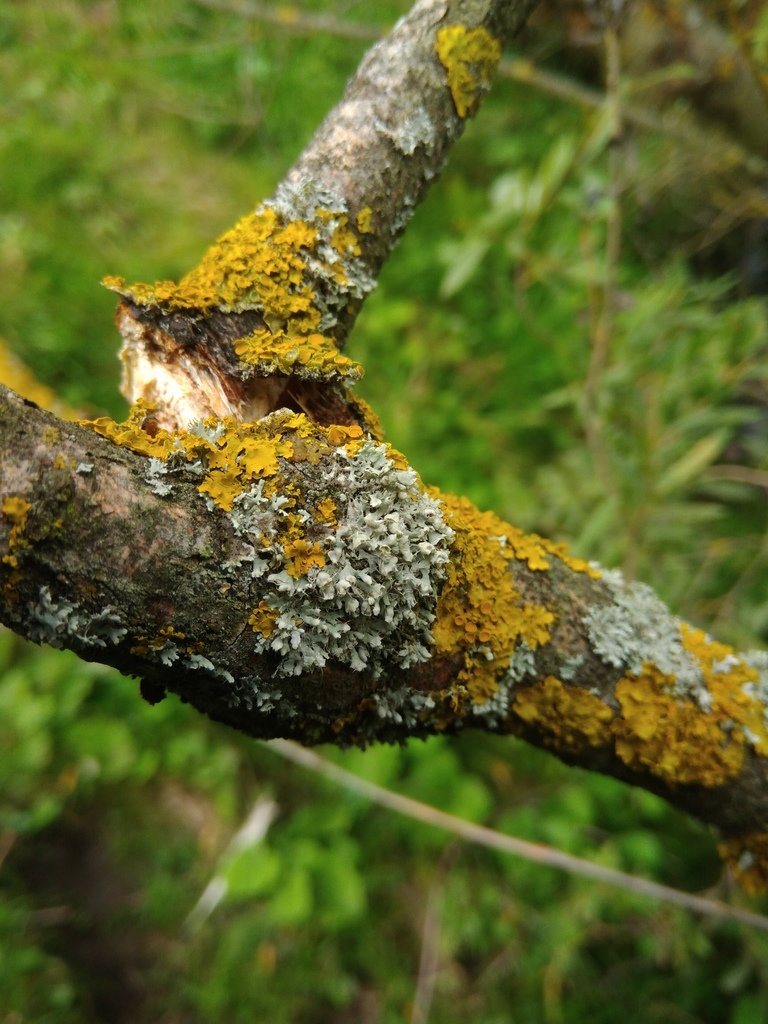
Gray above and distinctively white below, Physcia species form small, neat rosettes on bark. They often bear soredia or isidia at the lobe tips and are among the first lichens many beginners learn to recognize.
Nitrogen-tolerant and even nitrogen-loving, they thrive in nutrient-enriched environments where more sensitive species have vanished , making them useful markers of agricultural runoff and urban nitrogen deposition.
Identification
- Small, neat rosettes typically 1–5 cm across.
- Gray upper surface, distinctively WHITE lower surface (unlike most foliose lichens which are black below).
- Narrow lobes (0.5–2 mm wide) arranged in a radial pattern.
- Common species include P. adscendens (hooded tips with soredia), P. tenella (soredia at tips), and P. stellaris (isidia).
- K+ yellow on medulla distinguishes many species from similar genera.
Ecology & Habitat
One of the most pollution-tolerant lichen genera. Often the LAST foliose lichen present in heavily polluted urban areas. Its abundance relative to other lichens is used as an indicator of nitrogen enrichment.
Fun Facts
In many European cities, Physcia is the ONLY foliose lichen that survives , making it the last sentinel of lichen life in urban environments.
The distinctive white underside sets it apart from almost all other foliose lichens, which are typically black below. This makes it one of the easiest genera for beginners to identify.
Some Physcia species can complete their life cycle (from spore to mature thallus with apothecia) in just 3–5 years , remarkably fast for a lichen.
The genus name comes from the Greek "physkia" meaning a sausage-like bag , a reference to the somewhat inflated lobe tips of some species.
They are the #1 lichen genus encountered on urban trees in studies from cities around the world.
Distribution
Cosmopolitan; found worldwide in temperate and subtropical regions