Overview
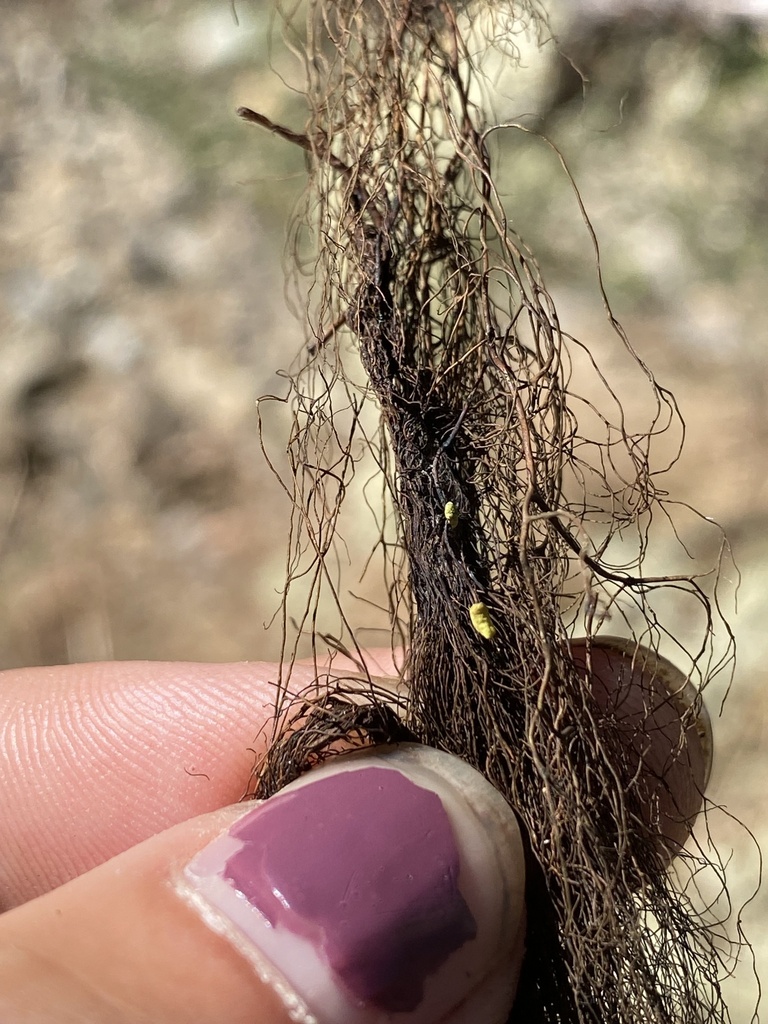
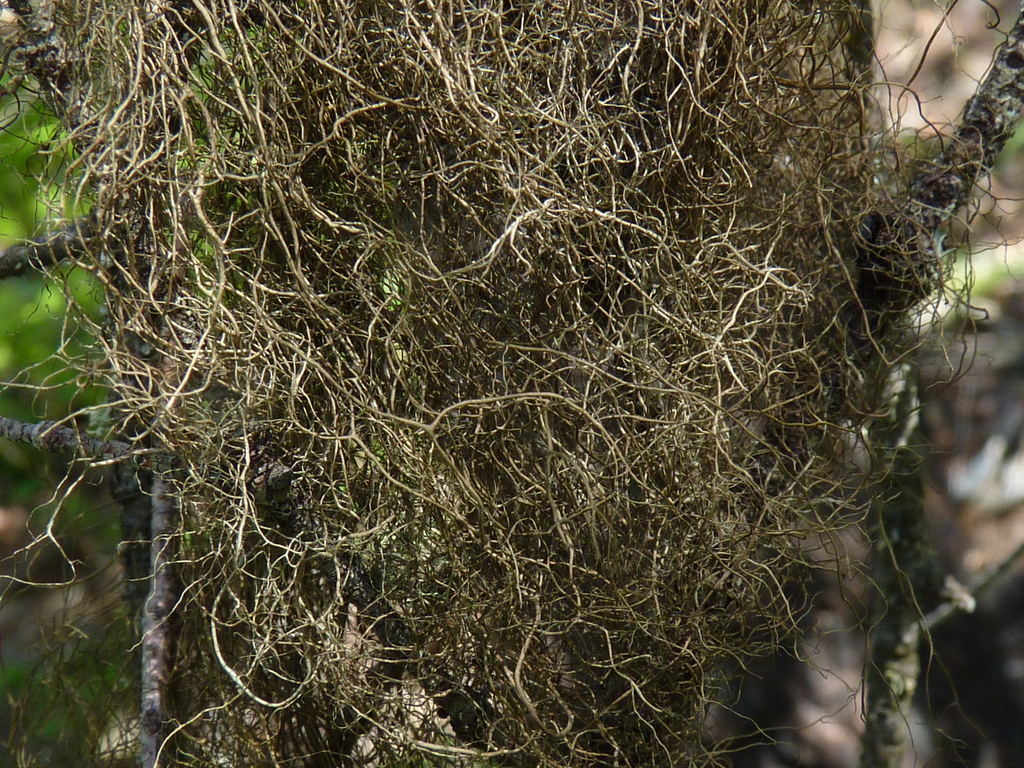
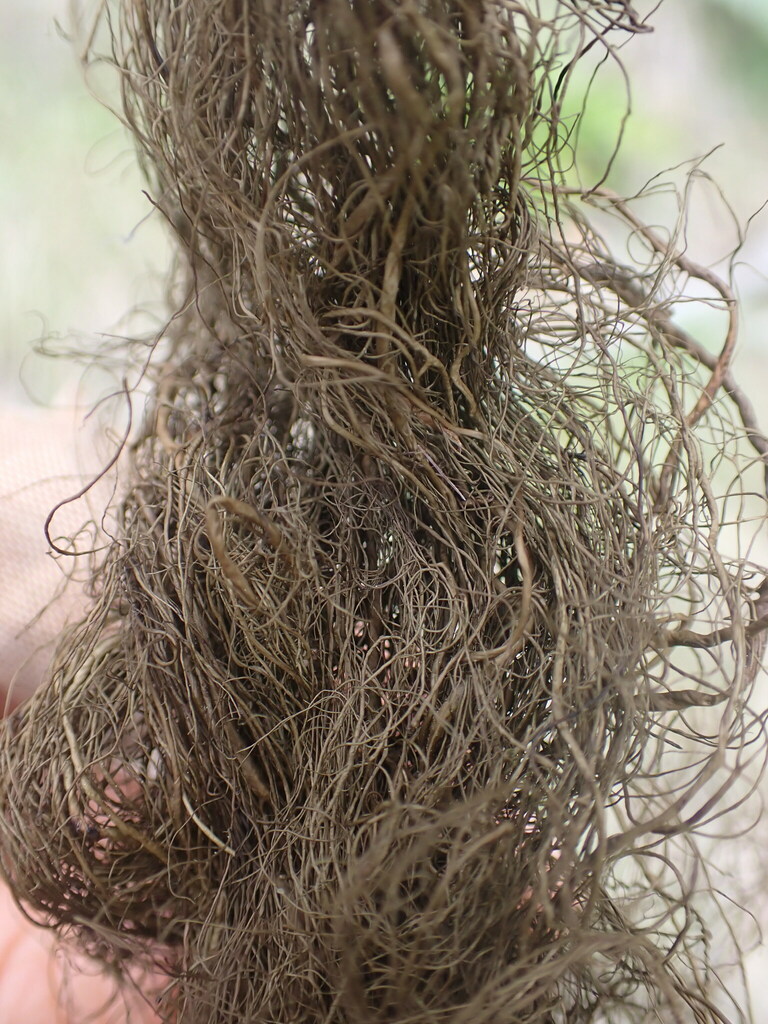
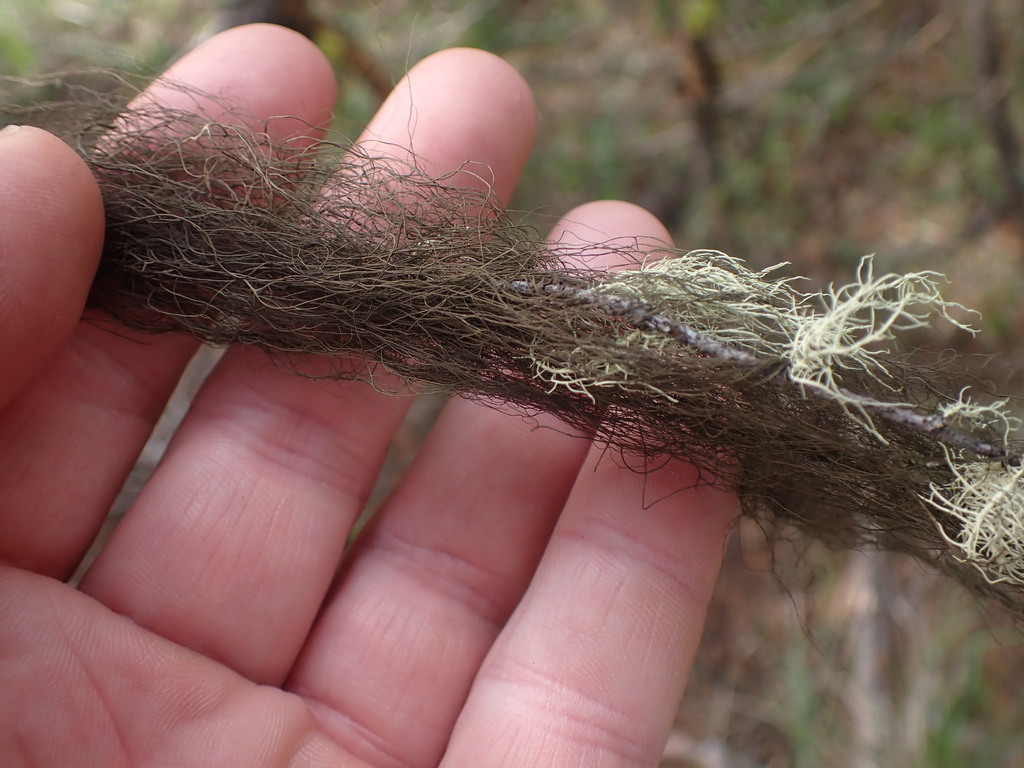
Dark brown to nearly black, pendant and hair-like, Bryoria species drape from conifer branches in long, dark curtains. The critical identification point: no central cord. Pull a strand apart, and it simply snaps cleanly, unlike Usnea, which reveals its stretchy white core.
Multiple species exist, including B. fremontii, which was a major traditional food source for Indigenous peoples of western North America, pit-cooked for days into a dark, nutritious bread.
Identification
- Dark brown to black, pendant, hair-like strands hanging from conifer branches.
- NO central cord. Pull a strand apart and it snaps cleanly (the key test to separate from Usnea).
- Thinner and darker than Usnea.
- Some species have white pseudocyphellae (tiny white dots or lines) along the strands.
- B. fremontii is typically dark brown; B. capillaris is paler and finer.
Ecology & Habitat
Dominant epiphyte in old-growth boreal and montane conifer forests. Provides critical winter food for caribou (who eat it when it falls from trees) and nesting material for many bird species. Extremely sensitive to air pollution.
Fun Facts
Bryoria fremontii was a critical food source for First Nations peoples of western North America. It was gathered, pit-cooked with hot stones for 12–24 hours, and made into a nutritious, calorie-dense bread called "wila" or "tree hair bread."
It was so important that tribal territories sometimes included "lichen gathering grounds" specifically for harvesting this species.
Caribou depend on fallen Bryoria as winter food. After storms, strands that fall from the canopy become accessible beneath shallow snow.
Some Bryoria species contain vulpinic acid, which is toxic. First Nations peoples knew which species were safe to eat and which were not, a distinction that required sophisticated ecological knowledge.
In a Pacific Northwest old-growth forest, the total Bryoria biomass in the canopy can exceed 1,000 kg per hectare.
Distribution
Circumboreal and circumpolar; also in tropical montane forests