Overview
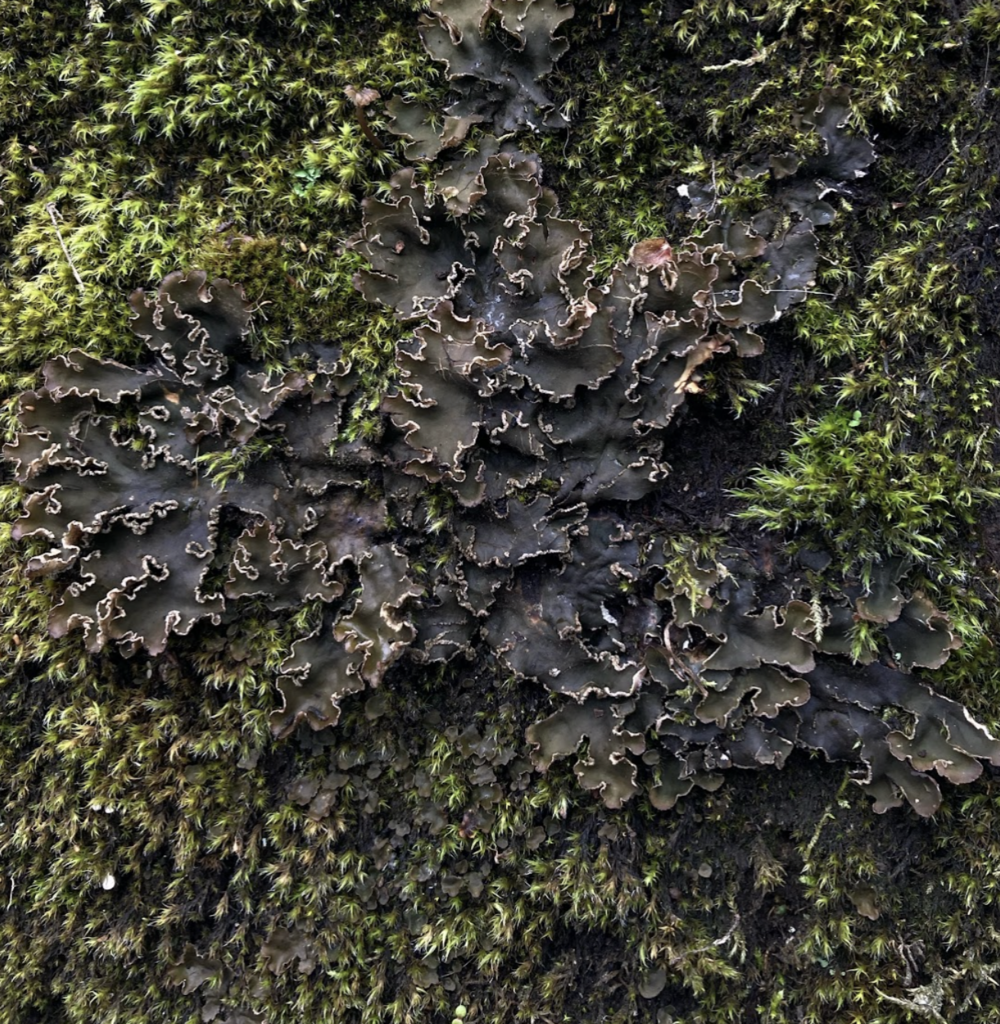
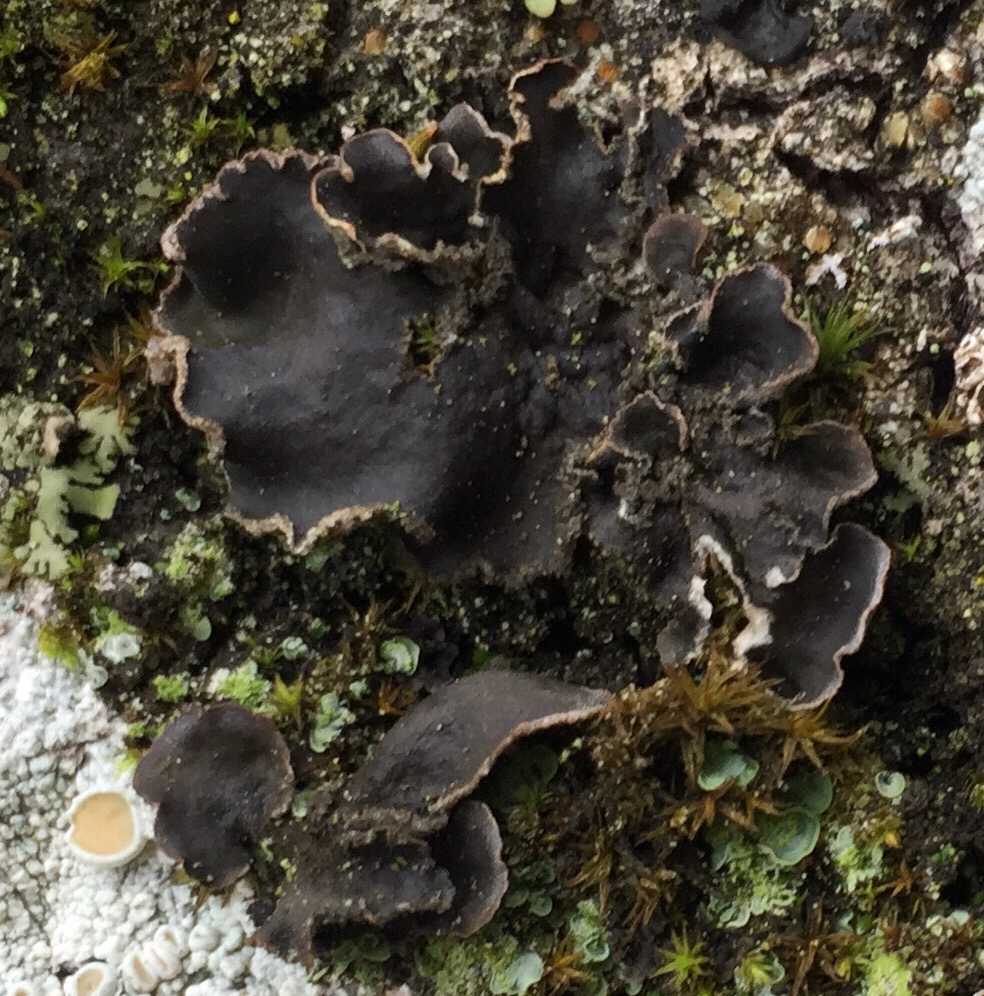
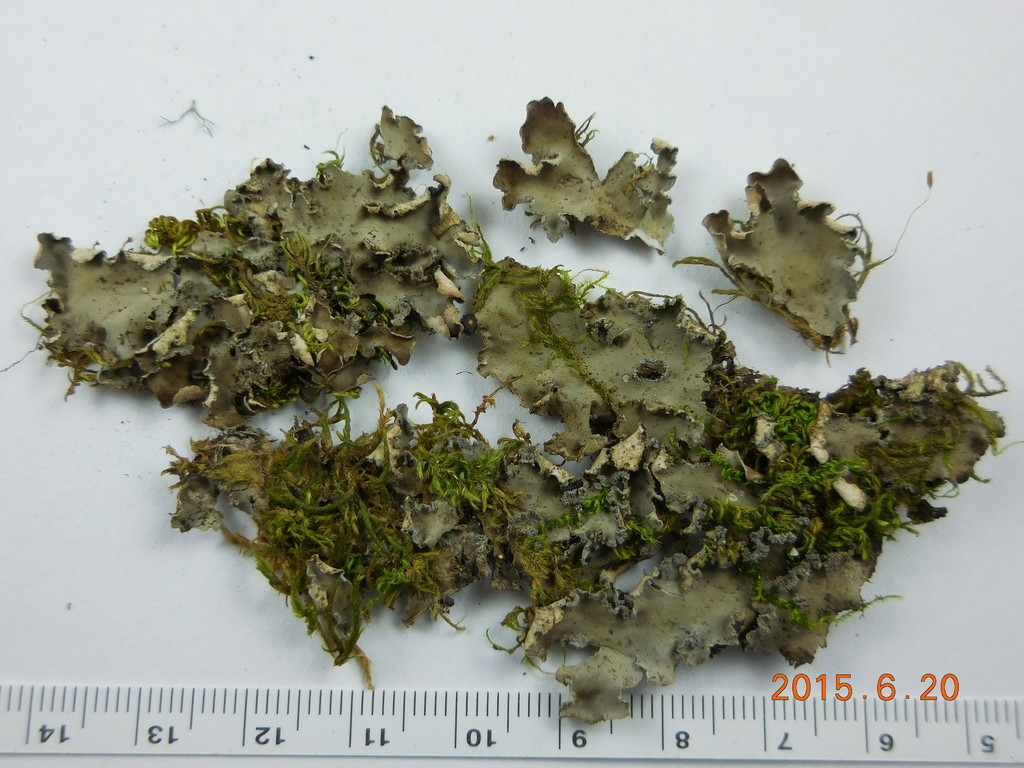
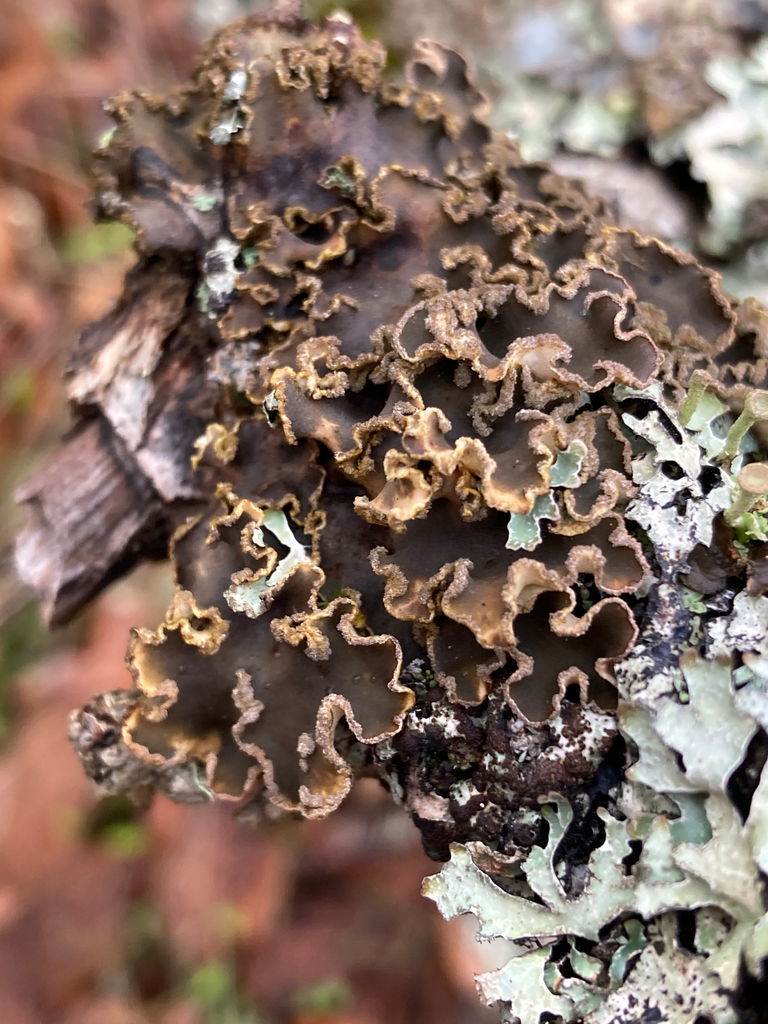
Brownish-green to grayish, Peltigera collina produces soredia along its lobe margins and brownish-black apothecia on raised lobe tips. The underside has brownish veins and variable rhizines that are often plumose (feathery).
Common on the bark of shrubs and hardwoods and often found growing over moss in moist forests, it is one of the more frequently encountered Peltigera species in temperate regions. Unlike many of its ground-dwelling relatives, it prefers to grow on tree bark.
Identification
- Brownish-green to gray, growing on bark rather than soil (unusual for Peltigera).
- Soredia along lobe margins (most Peltigera lack soredia).
- Feathery (plumose) rhizines on the underside, along with brownish veins.
- Brownish-black apothecia on raised lobe tips.
- Smaller than P. membranacea, typically 5–10 cm across.
Ecology & Habitat
One of the few Peltigera species that regularly grows on bark rather than soil. Like all members of the genus, it partners with Nostoc cyanobacteria and fixes atmospheric nitrogen.
Fun Facts
While most Peltigera species grow on the ground, this one bucks the trend by preferring tree bark , earning its name "collina" (of the hill) for its elevated habitat.
Its feathery (plumose) rhizines are among the most ornate root-like structures in the lichen world, visible under a hand lens as tiny fractal ferns.
It is one of the few Peltigera species that produces soredia, giving it an additional means of asexual reproduction beyond spores.
Distribution
Temperate regions of North America and Europe