Overview
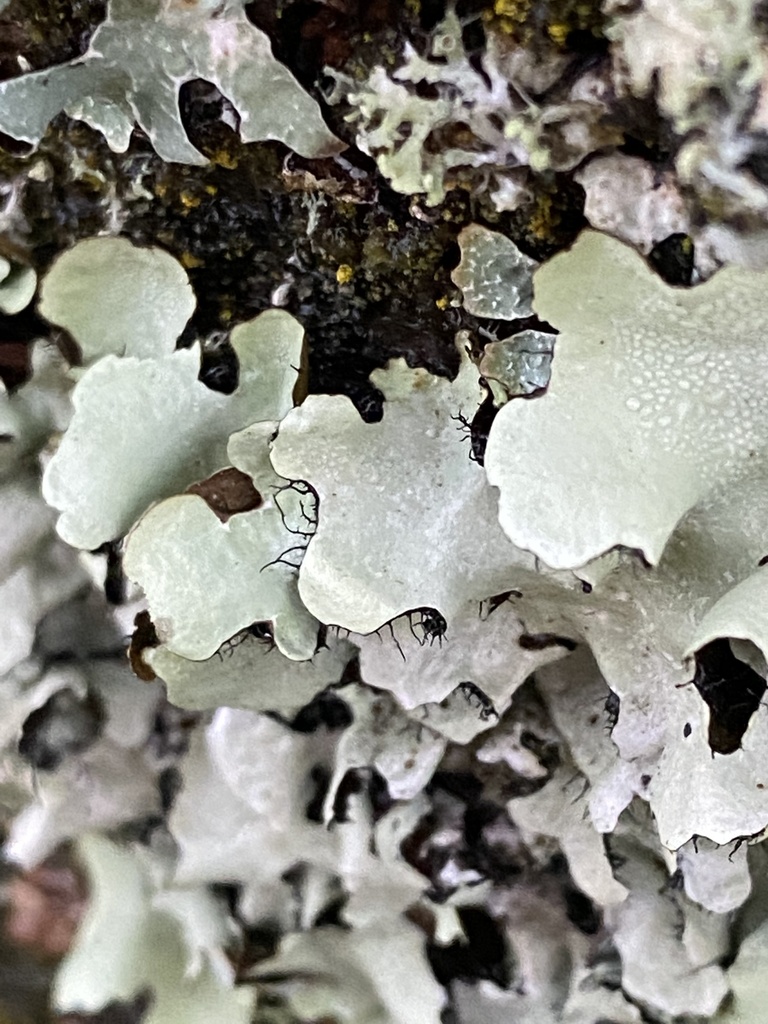
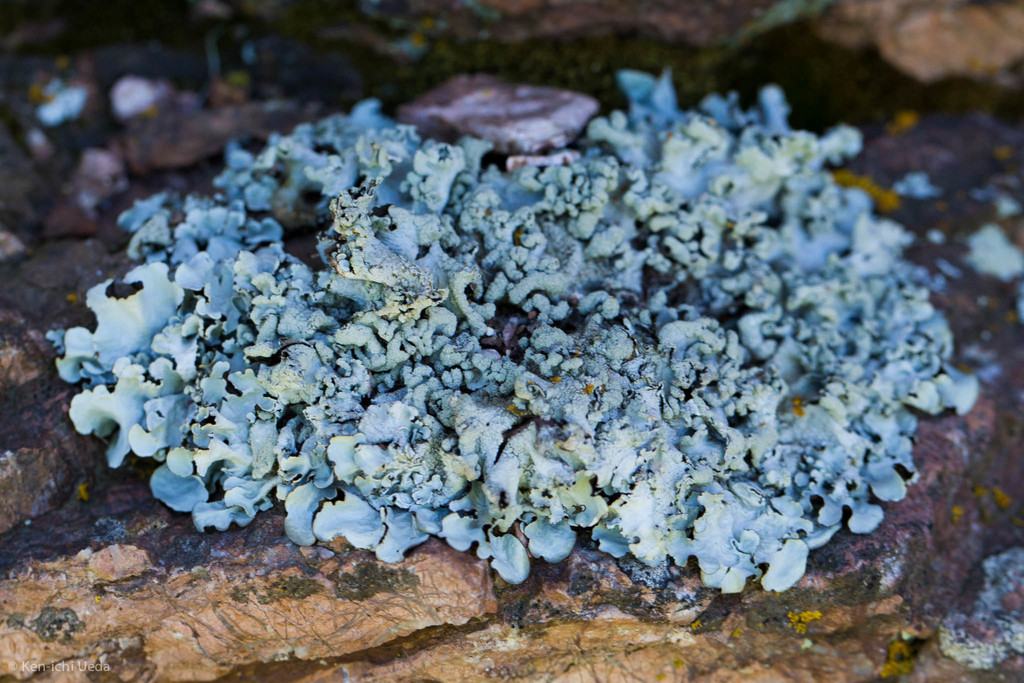
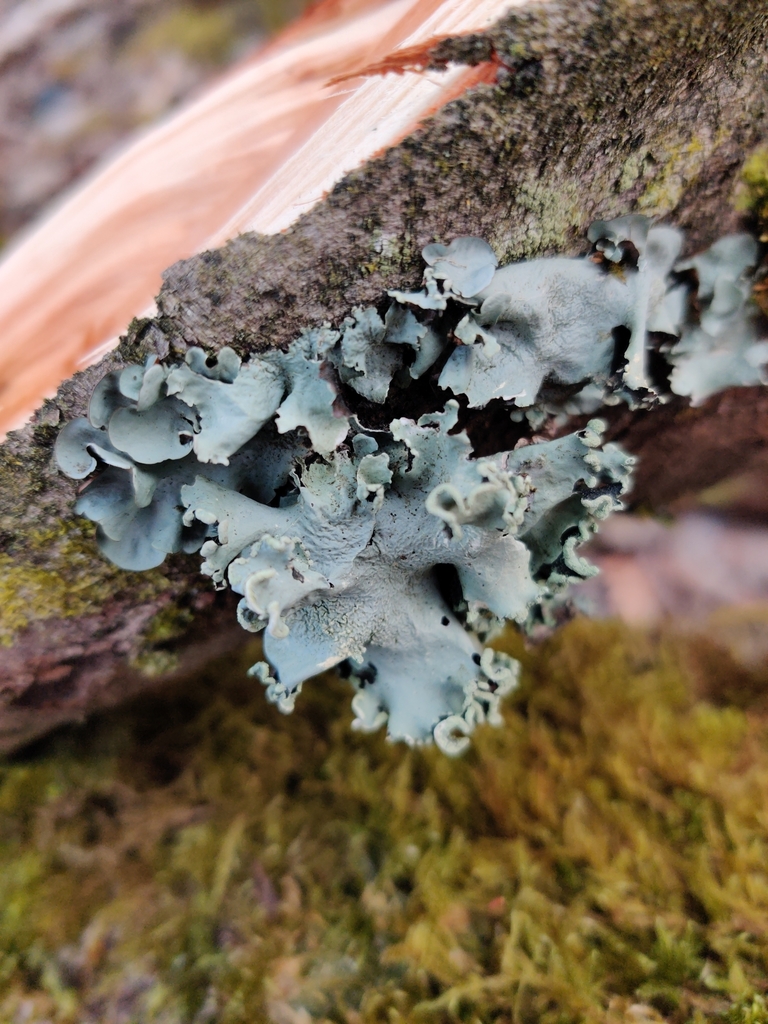
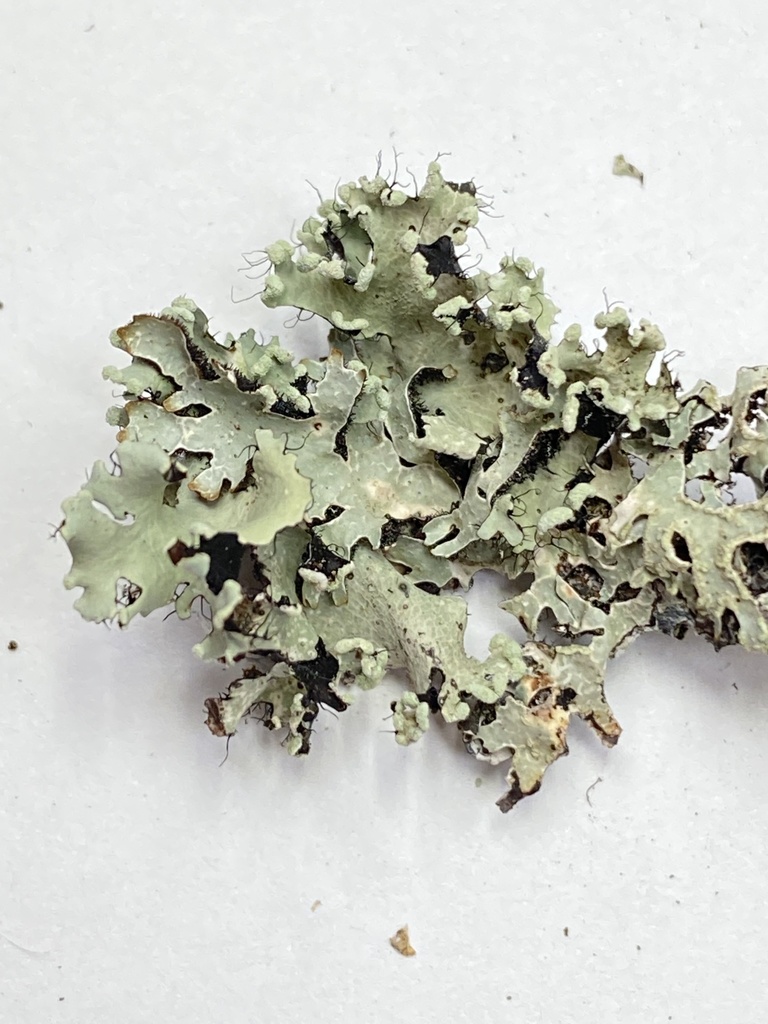
Bluish-white to greenish-gray and loosely attached to bark, Parmotrema perlatum has sparse black marginal cilia and small, crescent-shaped soralia near its lobe tips. The underside is black at the centre, becoming lighter toward the margins.
Fairly common in moist forests, it is one of the most widely recognized lichens in the culinary world, used in traditional Indian cuisine as "kalpasi" or "dagad phool" (stone flower), valued for its earthy, musky aroma in meat dishes and biryanis.
Identification
- Large, loosely attached thallus with broad lobes (5–15 mm wide).
- Bluish-white to greenish-gray upper surface.
- Sparse black cilia along lobe margins.
- Crescent-shaped soralia near lobe tips.
- Underside black centrally, paler toward margins, with a broad bare zone at the edge.
Ecology & Habitat
Prefers warm, moist forests with moderate to good air quality. Often found on the bark of mature trees in partially shaded positions. More common in tropical and subtropical regions than in the temperate zone.
Fun Facts
Known as "kalpasi" or "dagad phool" (stone flower) in India, it is one of the very few lichens regularly used as a culinary spice . It adds an earthy, smoky flavour to meat dishes, biryanis, and the famous Chettinad cuisine of Tamil Nadu.
India is the world's largest consumer of this lichen as a spice, with tonnes traded annually in spice markets. It is sometimes called the "secret ingredient" of authentic South Indian meat dishes.
The same species is used in traditional Ayurvedic medicine to treat digestive complaints, coughs, and skin conditions.
It has been found to contain compounds with anti-inflammatory and antimicrobial properties, lending some scientific support to its traditional medicinal uses.
The name "perlatum" means "widespread" , and indeed it is one of the most globally distributed lichen species, found on every inhabited continent.
Distribution
Cosmopolitan in warm-temperate and tropical regions worldwide