Overview
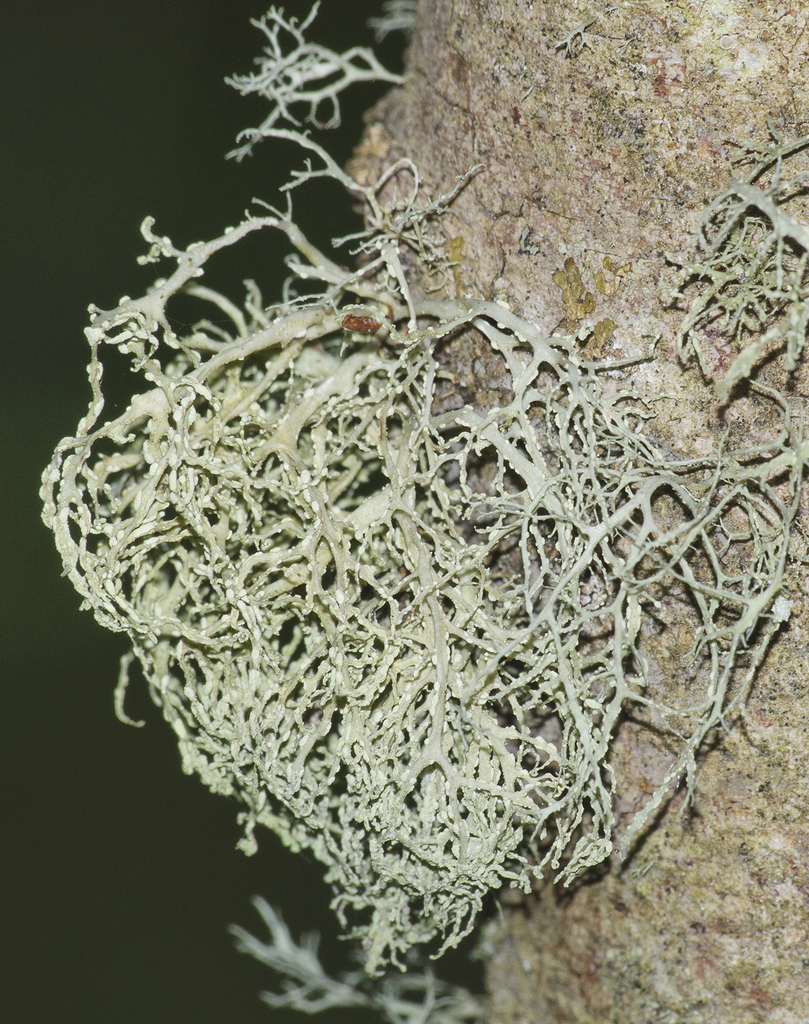
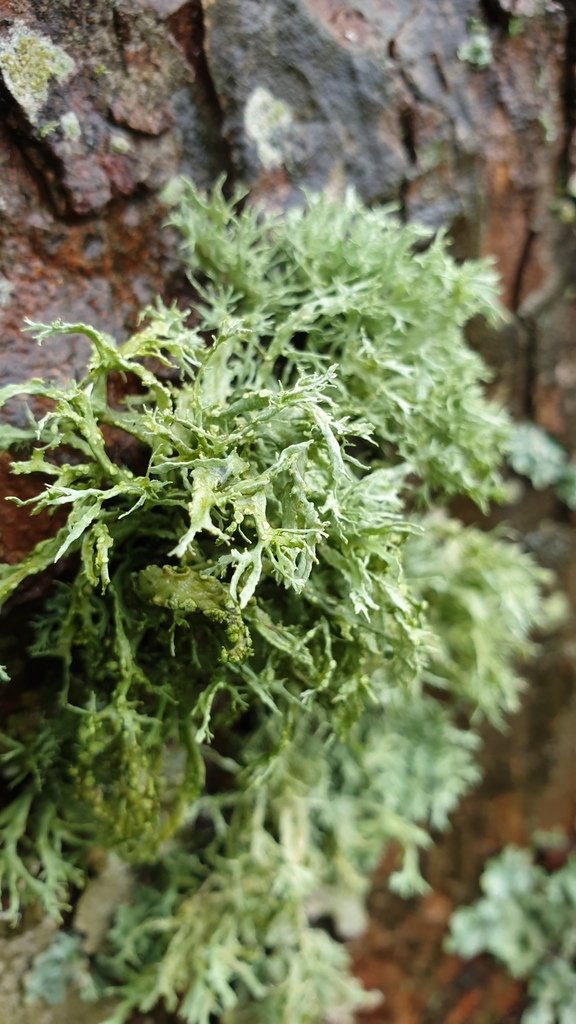
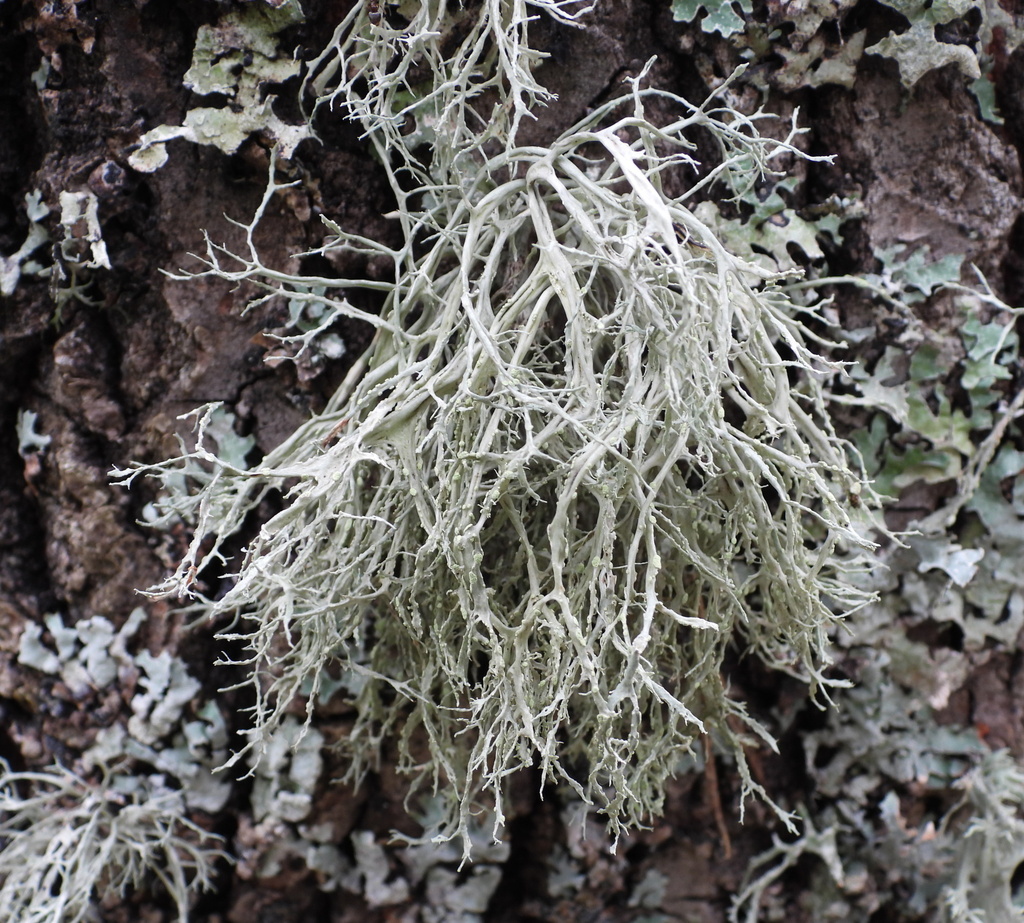
Yellow-green with flattened, strap-like branches (never round in cross-section), Ramalina species often bear soredia on their surfaces. R. farinacea is one of the most common species, found across Europe and North America.
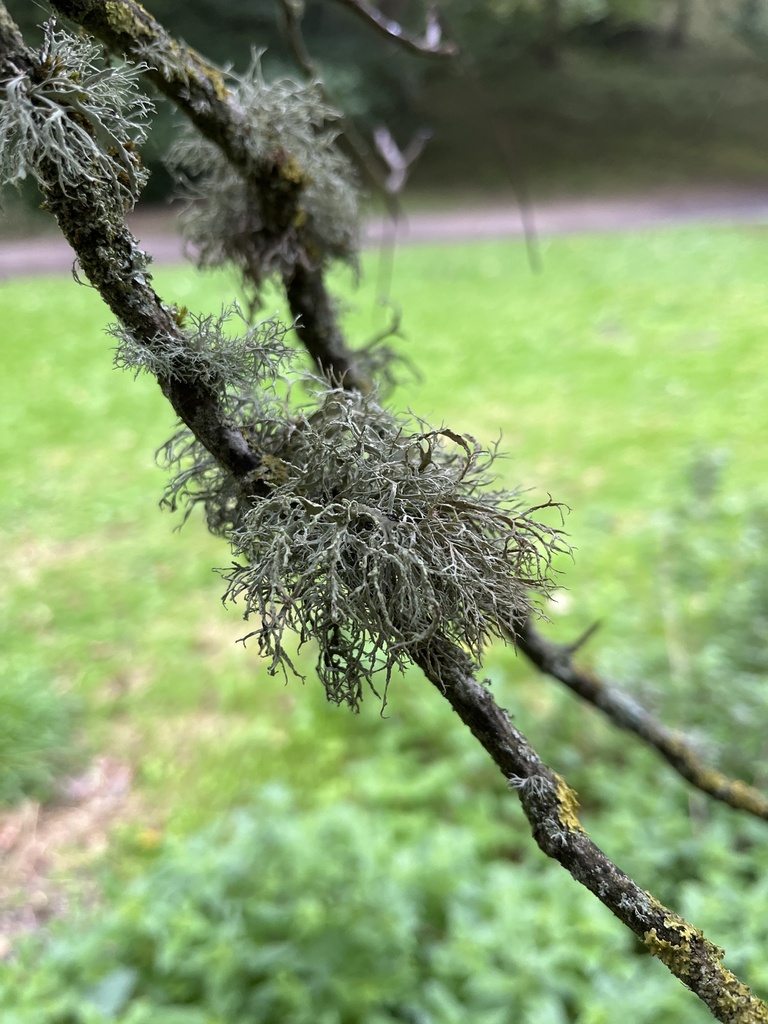
Preferring well-lit bark habitats, Ramalina is frequently found on exposed trees at forest edges and in open woodlands. Its flattened branches distinguish it from the round-stemmed Usnea and dark, thread-like Bryoria.
Identification
- Yellow-green to gray-green with FLATTENED, strap-like branches (not round like Usnea).
- Erect to pendant, typically 3–8 cm long.
- Soredia often present on branch surfaces.
- R. farinacea has narrow, sorediate branches; R. fraxinea is broader with disc-shaped apothecia.
- No central cord (unlike Usnea).
Ecology & Habitat
Prefers well-lit habitats on tree trunks and branches. Common at forest edges, along roads, and on isolated trees. More tolerant of exposure than Usnea or Bryoria.
Fun Facts
In the Canary Islands, Ramalina species were historically used to produce orchil, a valuable purple dye that was once more expensive than gold, traded across the ancient Mediterranean world.
Ramalina species have been used in traditional medicine across cultures: in the Mediterranean for treating kidney stones, in East Africa for stomach complaints, and in India as an antiseptic.
Some species can photosynthesize using only atmospheric humidity; they don't need liquid water, making them superbly adapted to fog-belt environments.
The genus contains over 240 species worldwide, making it one of the most species-rich lichen genera.
In coastal California, Ramalina menziesii (lace lichen) was designated the official state lichen in 2015. California was the first state to have one.
Distribution
Cosmopolitan; found worldwide in temperate, subtropical, and tropical regions