Overview
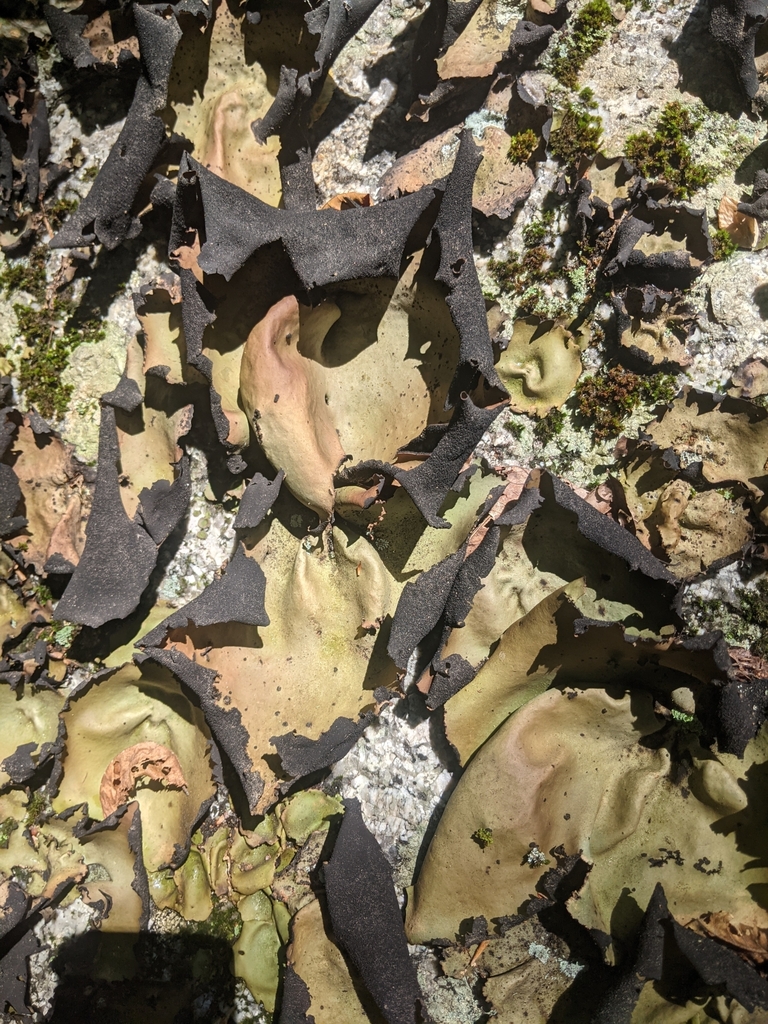
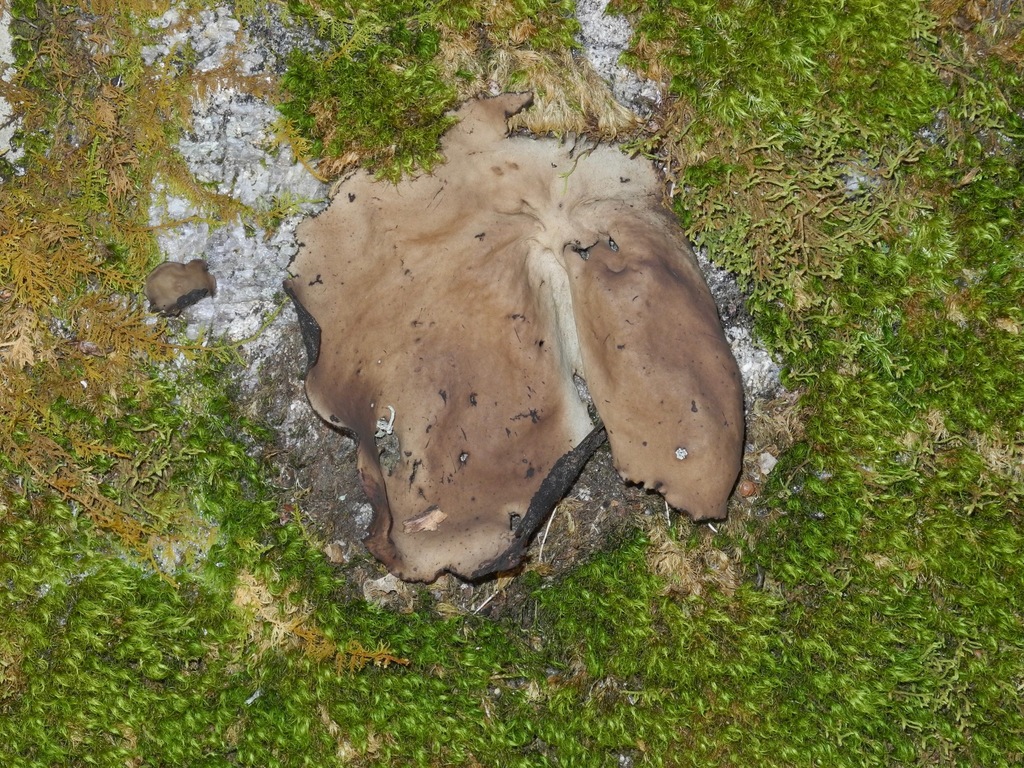
Large, leathery, single-lobed plates attached to rock by a single central point (umbilicus), Umbilicaria mammulata is one of the largest lichens in eastern North America, with individual thalli often reaching 15–30 cm across.
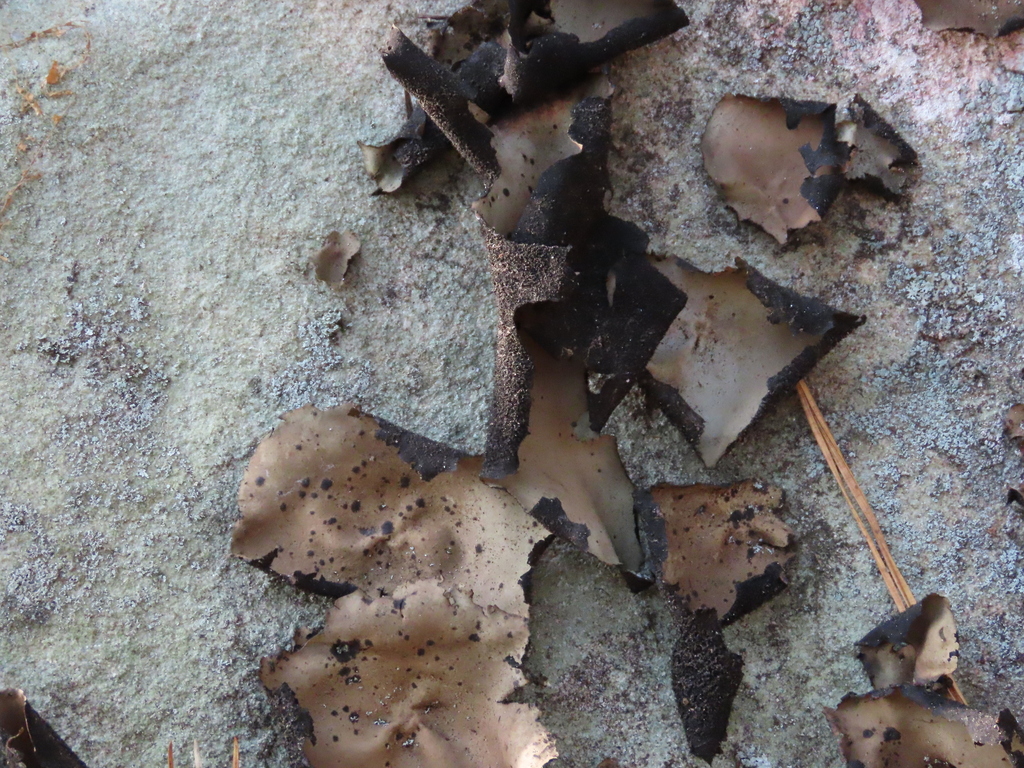
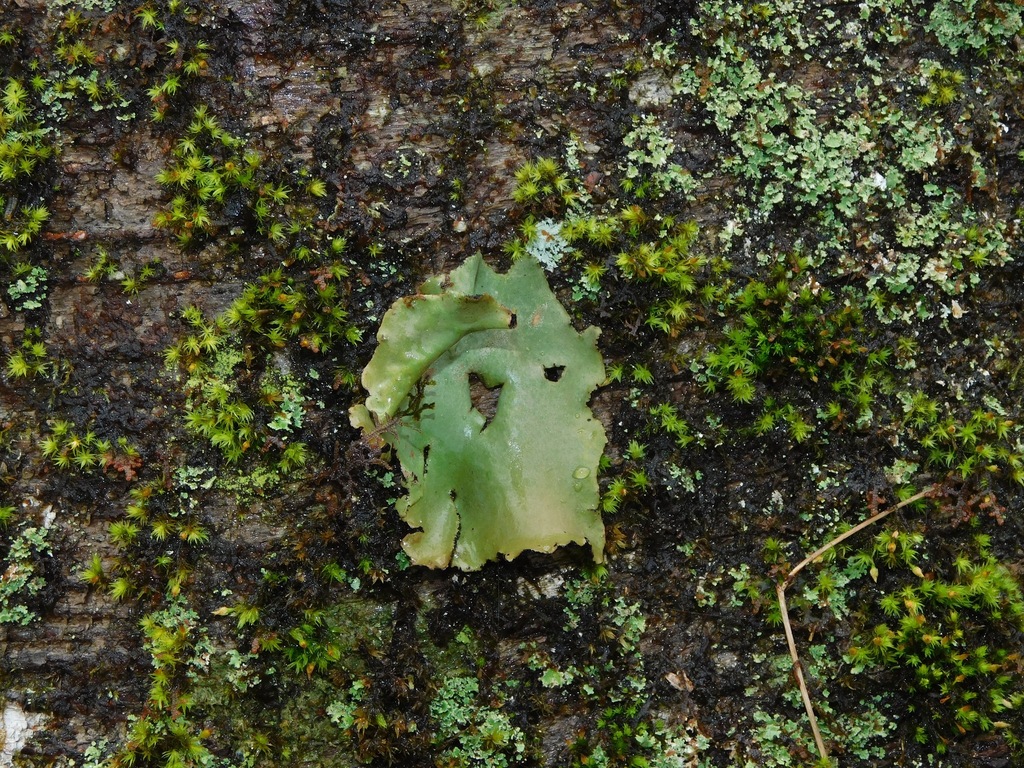
The upper surface is smooth, olive-brown to dark brown, while the underside is covered in a dense mat of short, dark papillae (the "mammulae" of its name). When wet, the thallus becomes flexible and rubbery; when dry, it is stiff and brittle.
Often growing in dramatic curtains on overhanging cliff faces, it is a striking sight in the Appalachian Mountains and a lichen that even non-lichenologists notice and remember.
Identification
- Very large (10–30 cm), single-lobed, plate-like thallus attached by one central point.
- Upper surface smooth, olive-brown to dark brown; may have a slight bloom.
- Underside densely covered in short, dark, rounded papillae (mammulae).
- Always on siliceous rock (granite, gneiss); never on limestone.
- Apothecia occasionally present as raised, gyrose (wrinkled) black discs.
Ecology & Habitat
Grows on vertical and overhanging faces of large boulders and cliffs, especially in the Appalachian Mountains. Prefers north-facing or shaded rock faces with reliable moisture from fog or seepage. Often found in deep gorges and north-facing ravines.
Fun Facts
Rock tripe is famous as an emergency food . Indigenous peoples and early European explorers boiled it extensively to make a gelatinous, nutritious (if tasteless) survival food. It sustained several expeditions when other food ran out.
It is one of the few lichens large enough to be easily visible from across a valley — curtains of U. mammulata on cliff faces can be spotted from hundreds of meters away.
The single attachment point (umbilicus) means the entire thallus can flap in the wind, which aids gas exchange and helps shed excess water that would otherwise support algal overgrowth.
Individual thalli may be centuries old . Growth rates are estimated at less than 1 mm per year radially, meaning a 30 cm thallus could be over 300 years old.
In Korean and Japanese cuisine, a close relative (U. esculenta) is a prized delicacy, harvested from cliffs and served in soups and salads.
Distribution
Eastern North America, from the Appalachians to the Canadian Shield