Overview
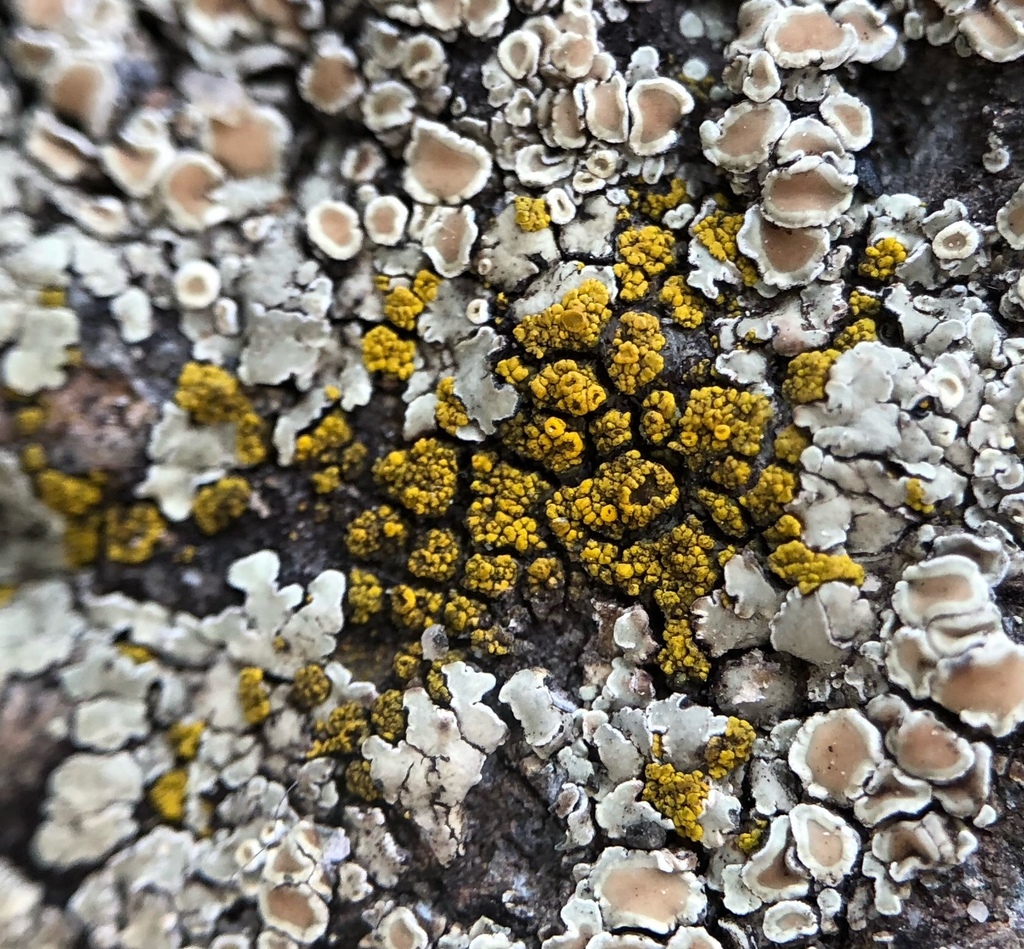
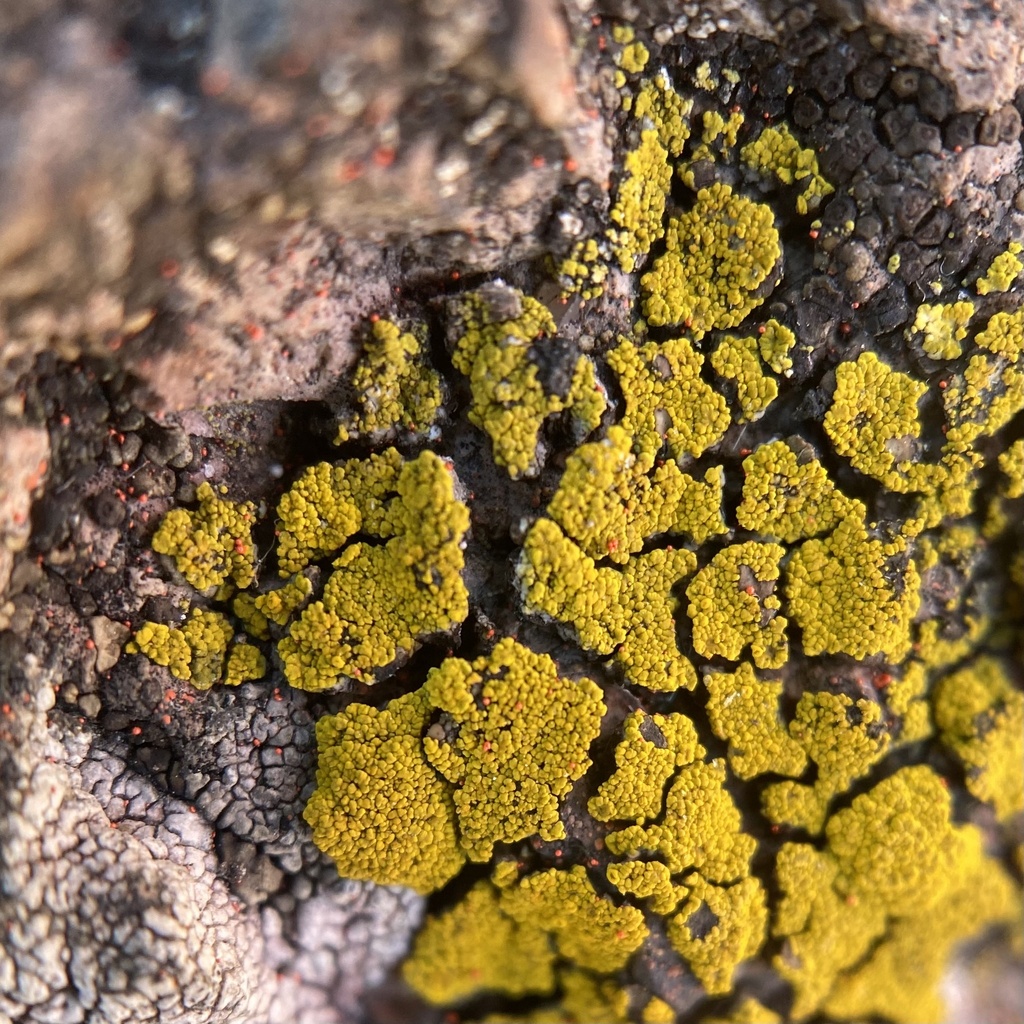
Egg-yolk yellow granules clustered into small patches or spreading crusts, Candelariella vitellina is one of the most common yellow lichens on stone walls, concrete posts, rocks and old fence rails. The name vitellina means "like egg yolk".
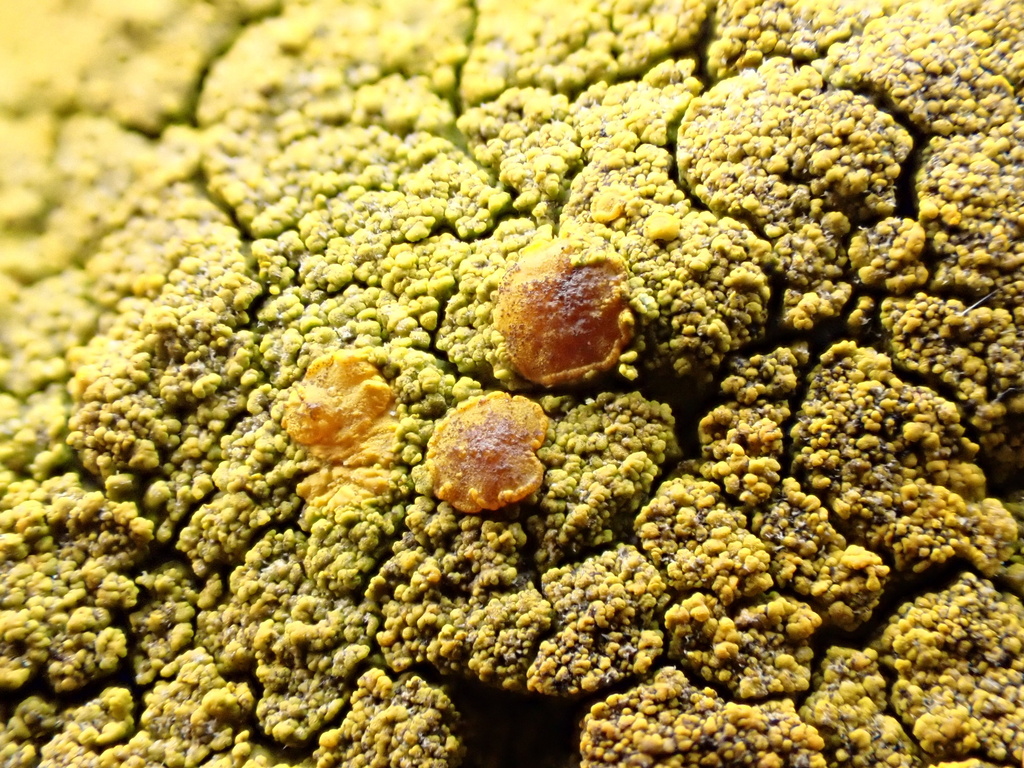
The thallus is made of tiny granules or areoles up to about 0.5 mm, sometimes finely lobed at the edge, which can merge into a thick crust. Yellow apothecia 0.35–1 mm across, with a darker yellow disc and a persistent rim, are frequent.
Like the candleflame lichen it owes its colour to pulvinic-acid pigments (calycin and relatives). Under a microscope its asci hold 12–32 spores each, far more than the usual eight.
Identification
- Mustard- to egg-yolk-yellow granular crust; no lower surface and no free lobes.
- Apothecia common, 0.35–1 mm, yellow with a persistent rim.
- Thallus K− (sources differ on a faint reddish reaction on the apothecial rim); C−.
- Orange crusts of Caloplaca and lobed Xanthoria are K+ red to purple.
- Candelaria concolor is also K− but has tiny leafy lobes with a white underside and usually grows on bark.
Ecology & Habitat
A tolerant, widespread crust that readily colonises human-made surfaces such as concrete, tarmac, brick, gates and worked timber, as well as natural rock. It is most luxuriant where birds perch and droppings enrich the surface, often alongside orange Xanthoria and grey Physcia species.
Fun Facts
Its many-spored asci (12–32 spores each instead of the usual eight) are a feature of the genus.
First described by Ehrhart in 1785 as Lichen vitellinus, it has since been placed in genera including Lecanora, Caloplaca and Xanthoria.
It is host to a specialist lichen-dwelling fungus, Carbonea vitellinaria, which forms small black fruiting bodies on its thallus.
Distribution
Worldwide; common in Britain and Europe and across North America (outside the hot deserts)