Photos
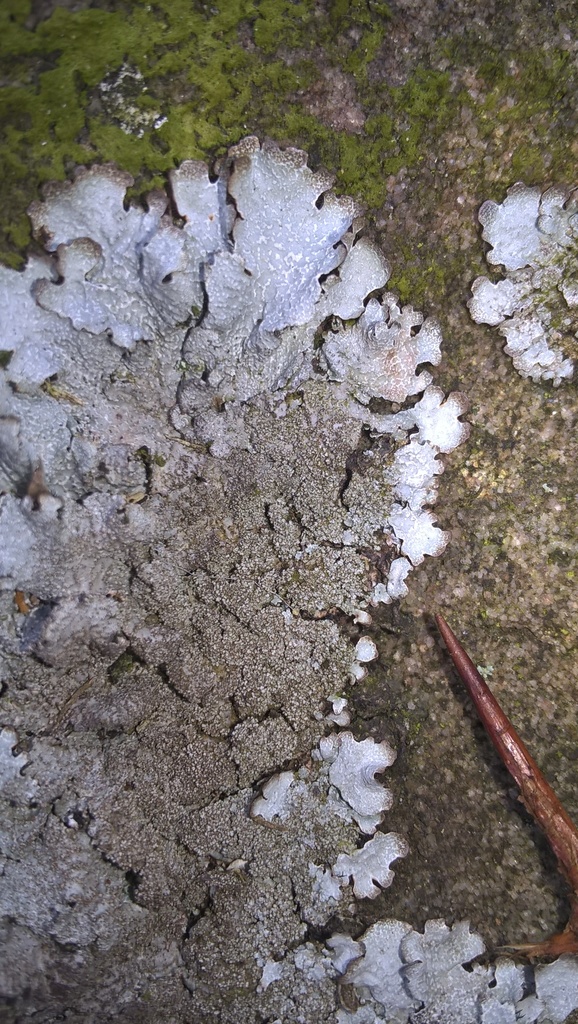
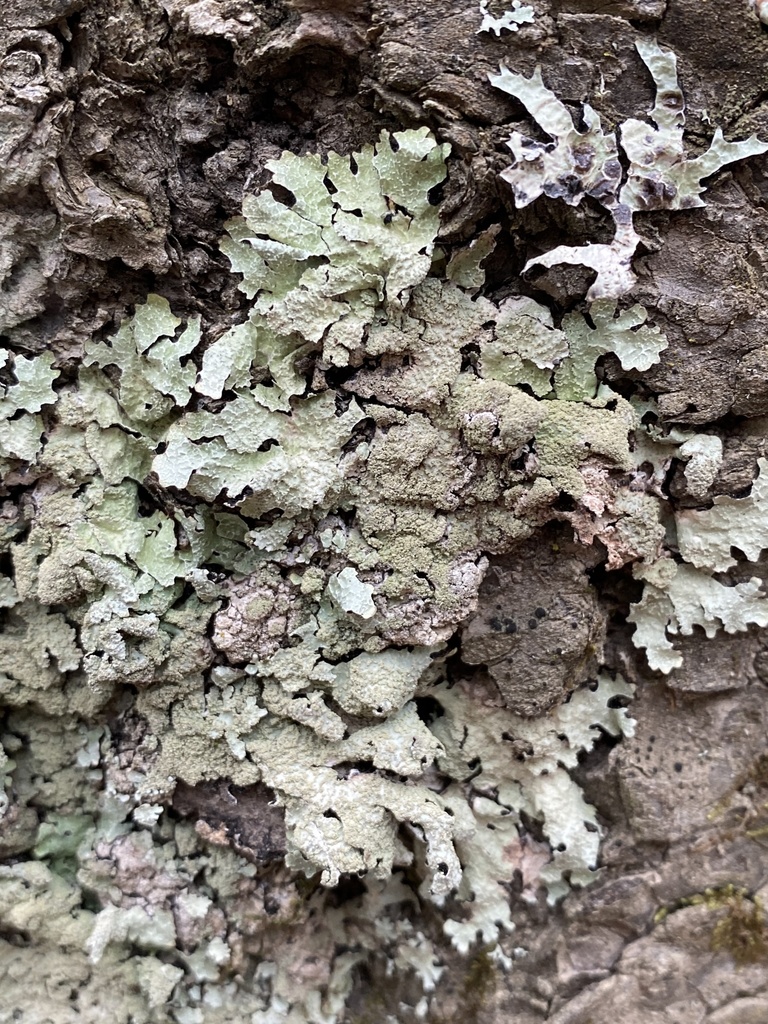
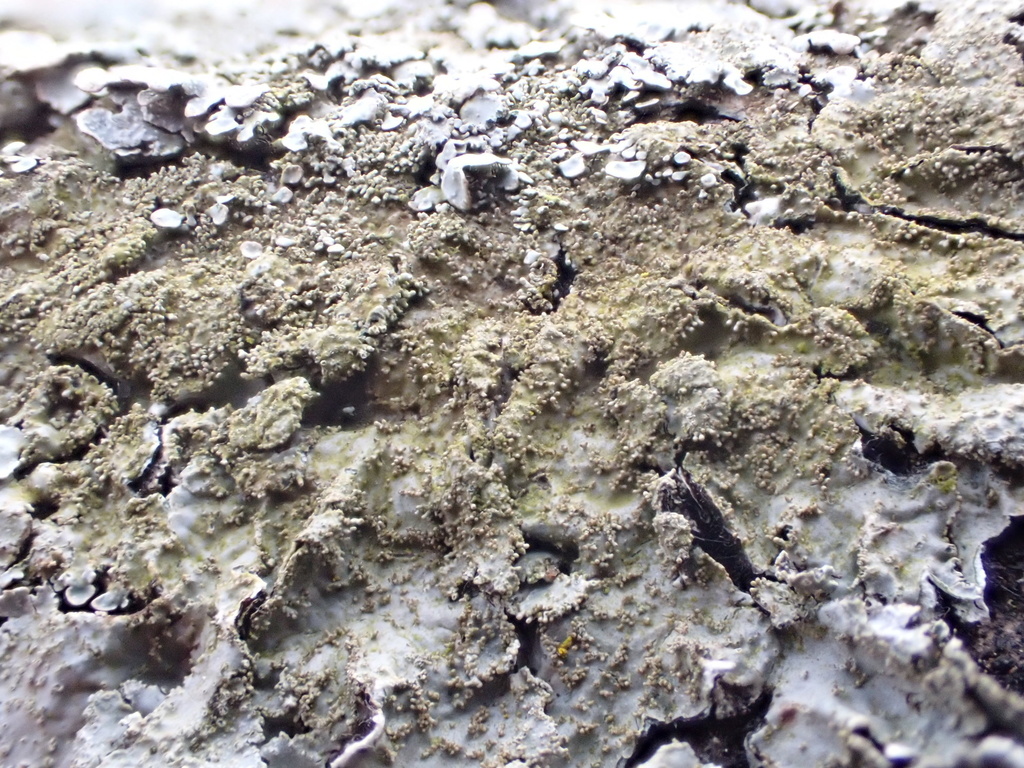
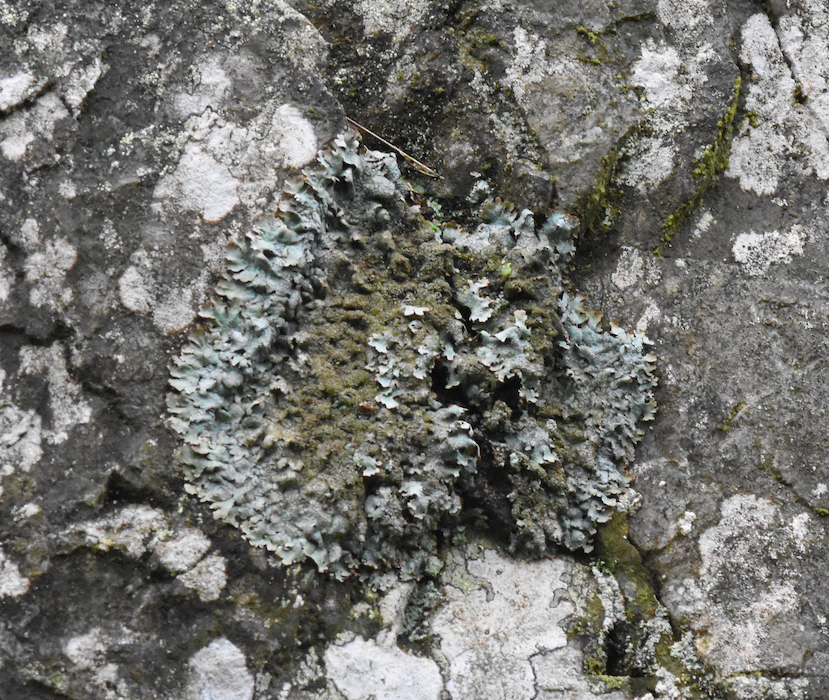
Photos by stephen54, toby_spribille, jeanpaulboerekamps, sbushes via iNaturalist (CC licensed)
Overview
Pale grey to blue-grey, often browner at the lobe tips, Parmelia saxatilis has the same network of raised white lines (pseudocyphellae) as P. sulcata, but along that network it grows tiny, dark-tipped cylindrical isidia instead of powdery soredia. It is common on acid rocks, walls and trees across Britain and much of Europe.
Lobes are up to about 3 mm wide and widen slightly at the tips. The underside is black, paler at the margin, with simple rhizines. Dark red-brown apothecia up to 1 cm across are occasional.
What most field guides call P. saxatilis is really an aggregate: P. saxatilis in the strict sense, P. ernstiae and P. serrana look alike, and in practice need DNA to separate.
Identification
- Grey foliose rosettes with a raised net of white lines and dots (pseudocyphellae) on the upper surface.
- Cylindrical isidia, often grey-brown at the tips, along the network and spreading over the centre; no soredia.
- Underside black (paler at the margin) with simple rhizines.
- Cortex K+ yellow (atranorin); medulla K+ yellow-orange turning red, P+ orange, C− (salazinic acid).
- Tell it from P. sulcata by isidia (cortex-covered pegs) versus soredia (loose powder). In eastern North America, the bark species P. squarrosa has bottle-brush (squarrose) rhizines.
Ecology & Habitat
Typically on acid rock and walls, and on the bark of acid-barked trees, becoming more abundant in upland and western districts of Britain. The UK's lichen-based nitrogen air-quality index lists Parmelia species, including P. saxatilis, among the nitrogen-sensitive lichens, so it becomes scarcer where ammonia and other nitrogen pollution is high.
Fun Facts
Under the name crottle (crotal in Scotland) it was a traditional Scottish dye lichen, giving red-brown to rusty-orange shades used in home-spun cloth including Harris tweed.
Linnaeus named it Lichen saxatilis ("lichen of rocks") in 1753; Erik Acharius moved it to Parmelia in 1803.
With P. sulcata it is the classic pair for learning the difference between isidia and soredia: the two are otherwise very similar.
A study of the aggregate in Scotland found that no combination of visible, ecological or chemical characters reliably tells its member species apart.
Distribution
Throughout Britain and Ireland and widely in Europe; the aggregate is widespread in the Northern Hemisphere. In eastern North America many bark records belong to the look-alike P. squarrosa