Overview
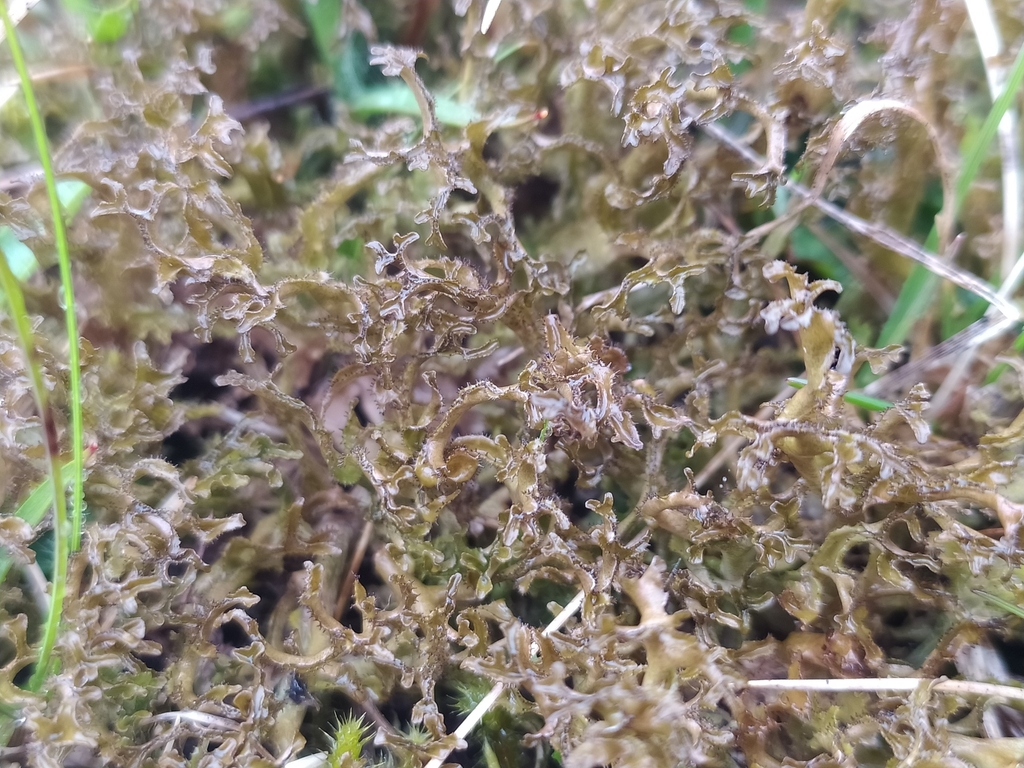
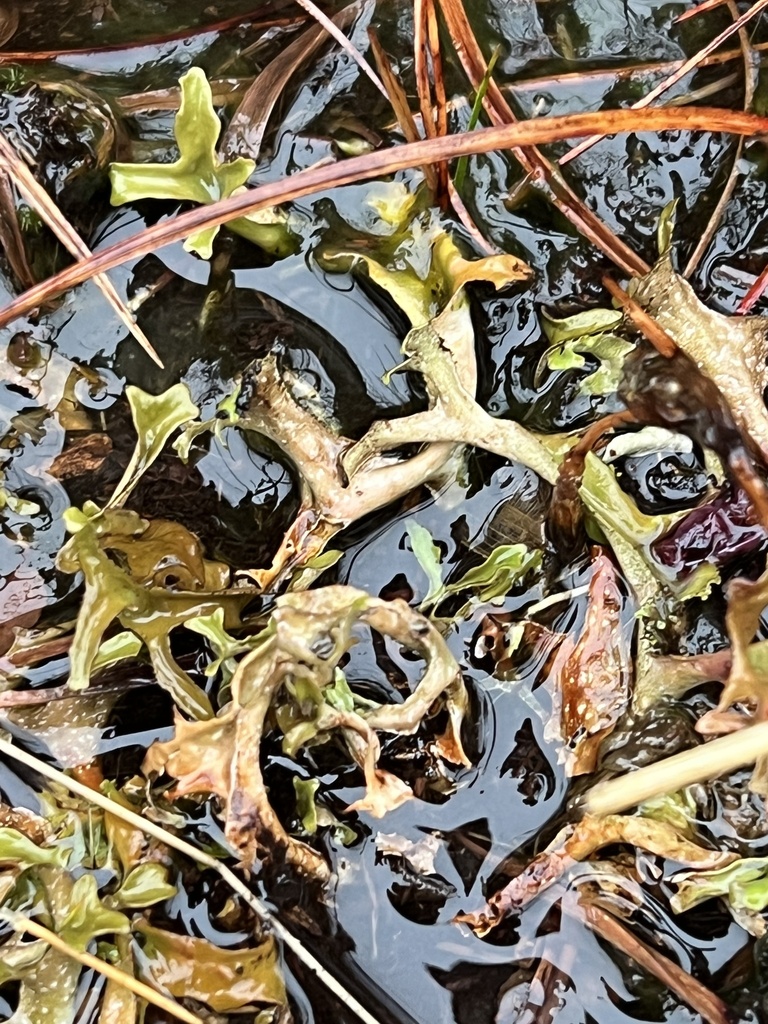
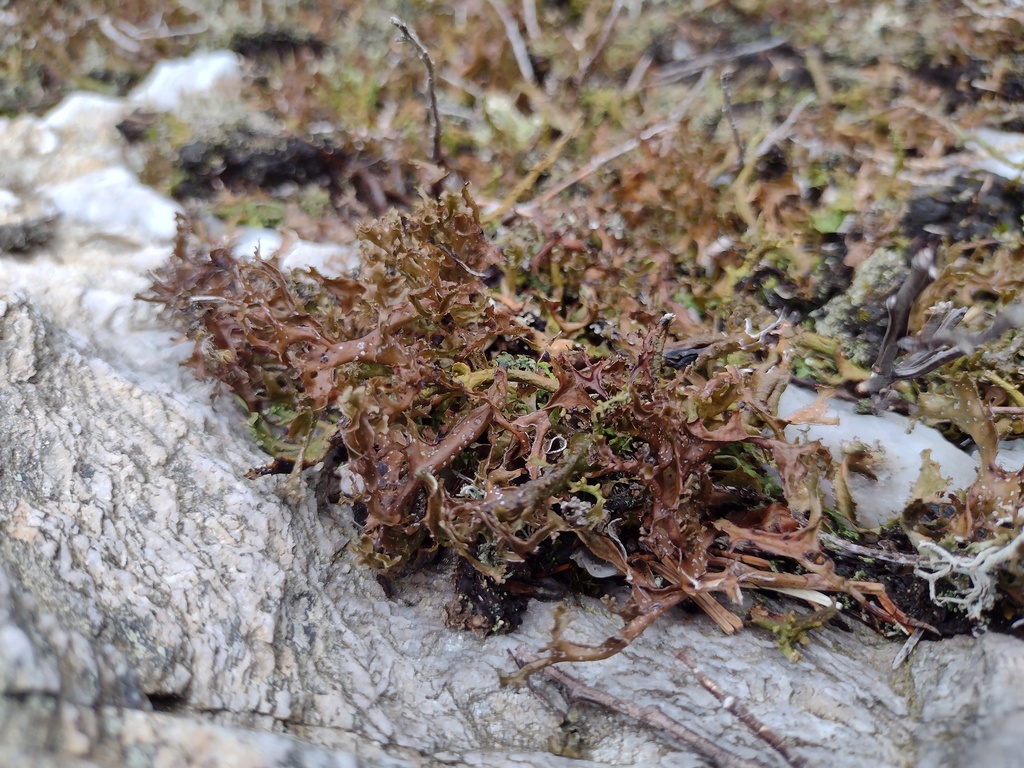
Despite the name, Iceland moss is a lichen, not a moss. Cetraria islandica forms loose, upright tufts up to about 10 cm tall of flattened, channelled, irregularly forked lobes, olive-green to chestnut-brown and often mottled paler or reddish, growing among heath plants and on tundra.
The lobes (1–10 mm broad) curl into gutters or loose tubes, and their edges carry short dark spines (stalked pycnidia). Look on the lower side for small white spots and lines: pseudocyphellae, pores in the cortex, which occur on the surface as well as along the margins. Brown apothecia are rare.
It is one of the few lichens people have eaten widely. Its main carbohydrate, lichenan, forms a jelly when boiled, and it has been used for food, fodder and herbal medicine across northern Europe for centuries.
Identification
- Tufts of flattened, channelled, forked lobes up to about 10 cm tall on soil; olive-green to chestnut-brown.
- Lobe margins fringed with short dark spines (pycnidia); no true cilia.
- White pseudocyphellae as spots or lines on the lower surface and along the margins.
- Medulla P+ red (fumarprotocetraric acid).
- Cetraria aculeata has round or angular, spiny, glossy dark-brown branches; C. ericetorum has pseudocyphellae only on the margins and is P−.
Ecology & Habitat
Grows on heaths, dunes, tundra, bogs, mountain meadows and open lichen woodland, most often on sandy soil in exposed places; in the south of its range it is confined to high elevations. It is highly palatable to caribou and reindeer and is also eaten by moose and muskox. It is generally absent from recently burned ground (USDA Fire Effects Information System).
Fun Facts
In northern Europe it was dried, powdered and boiled into a jelly for soups or mixed into bread in times of famine; in Iceland it is still added to porridge, soups and skyr.
The European Medicines Agency recognises its traditional use as a soothing remedy for mouth and throat irritation with dry cough, and for temporary loss of appetite.
During a beet-sugar shortage in Russia in 1942–43 it was used as an industrial source of glucose.
It is astringent enough to have been used for tanning leather, and yields a brown dye.
Distribution
Circumpolar: Arctic and boreal North America (south in mountains to Colorado, the Great Lakes, New England and the Appalachians), northern and mountain Europe including Iceland and upland Britain, and Asia