Photos
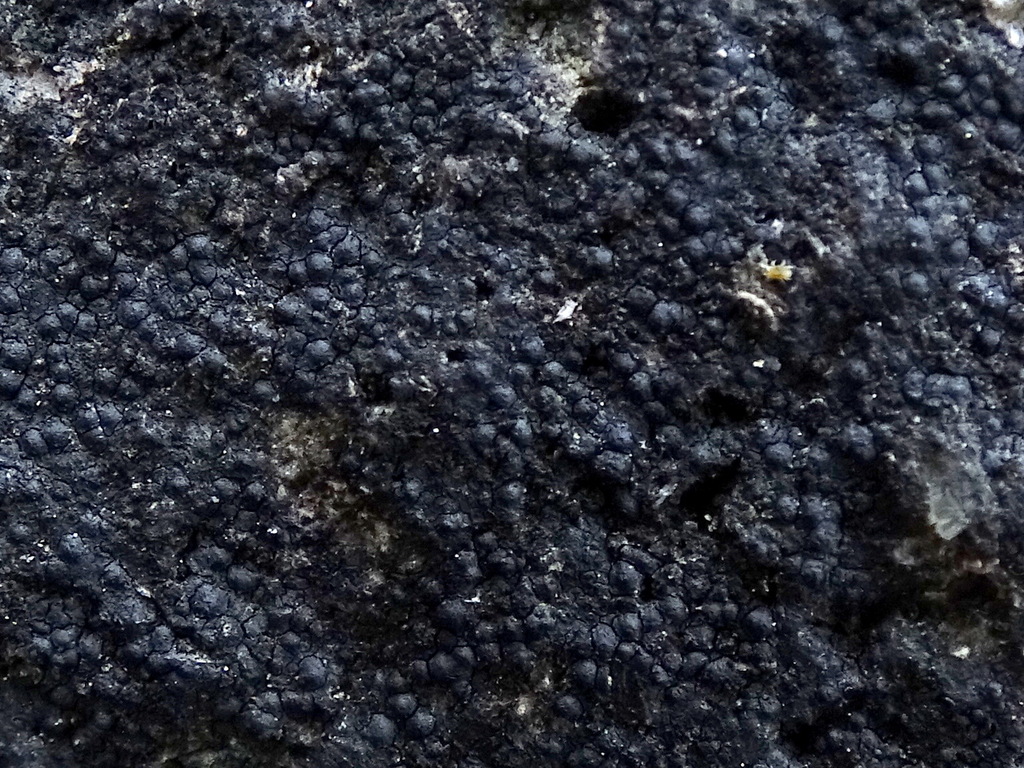
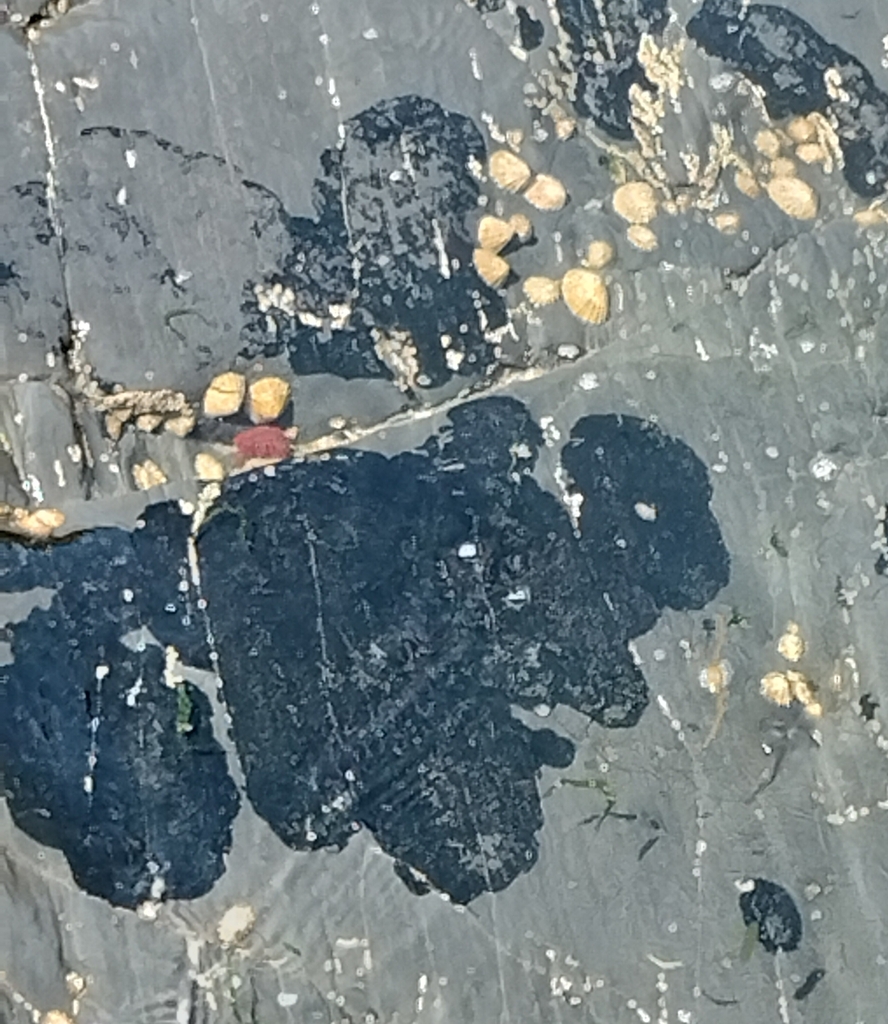
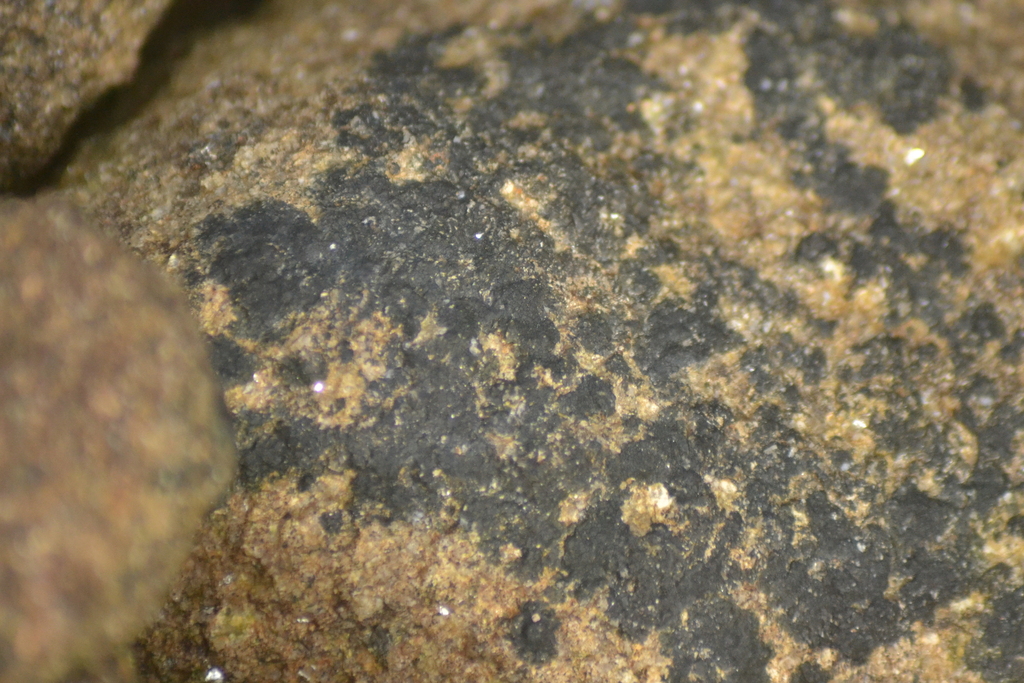
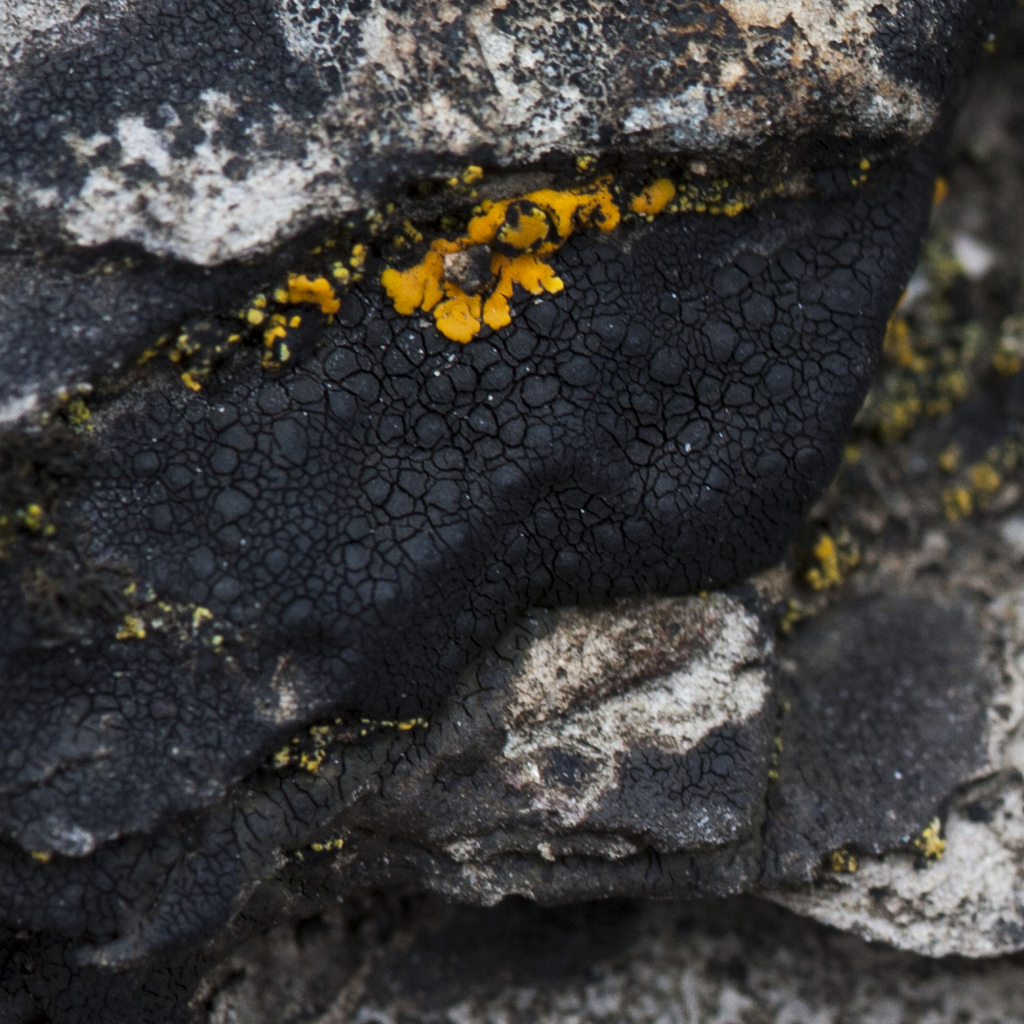
Photos by paulrfoth, daradesmond, une_once_de_nature, tim-johnson via iNaturalist (CC licensed)
Overview
A thin, matt-black crust that can coat whole bands of seashore rock, Hydropunctaria maura (still widely known as Verrucaria maura) forms the black zone of rocky coasts. From a distance it looks like a tide-line of spilt oil or tar, lying above the barnacles and below the orange and grey lichens of the splash zone.
Under a hand lens the crust, up to about 1 mm thick, is finely cracked like dried mud and dotted with tiny black bumps. These are perithecia, flask-shaped fruiting bodies 0.3–0.7 mm across sunk into the thallus. The crust is firmly fused to the rock.
It is the main biological marker of the supralittoral (splash) zone, and the band is wider on exposed, wave-beaten shores where spray reaches higher.
Identification
- Matt black, thin crust in a continuous band on hard shore rock at and above high-water mark.
- With a lens: dried-mud cracking and minute black perithecial dots (no discs).
- Fused to the rock and hard to remove, unlike a film of oil.
- Spot tests negative.
- Lichina species in the same zone are tiny black tufts or cushions rather than a flat crust.
Ecology & Habitat
Grows on hard rock on almost all rocky shores, from well above high water down into the barnacle and mussel zone. In the upper fringe it shares the rock with few other species, notably the rough periwinkle; lower down, barnacles and limpets settle over it. Its spores can germinate at seawater salinities that stop most other lichens' spores, and it makes sucrose in response to salt stress.
Fun Facts
Its response to oil spills has been studied for decades: dispersants used after the Torrey Canyon spill killed it, and after the Sea Empress spill new colonies were only about 2 mm across nine years later (MarLIN).
Colonies grow less than 1 mm a year, so cleared rock can stay bare for years.
Its fruiting bodies are perithecia: flasks buried in the crust that release spores through a tiny pore, unlike the open discs of most familiar lichens.
Distribution
Circumpolar from the Arctic to temperate coasts; very common around the British Isles and NW Europe; in North America south to New England and California; also southern hemisphere coasts